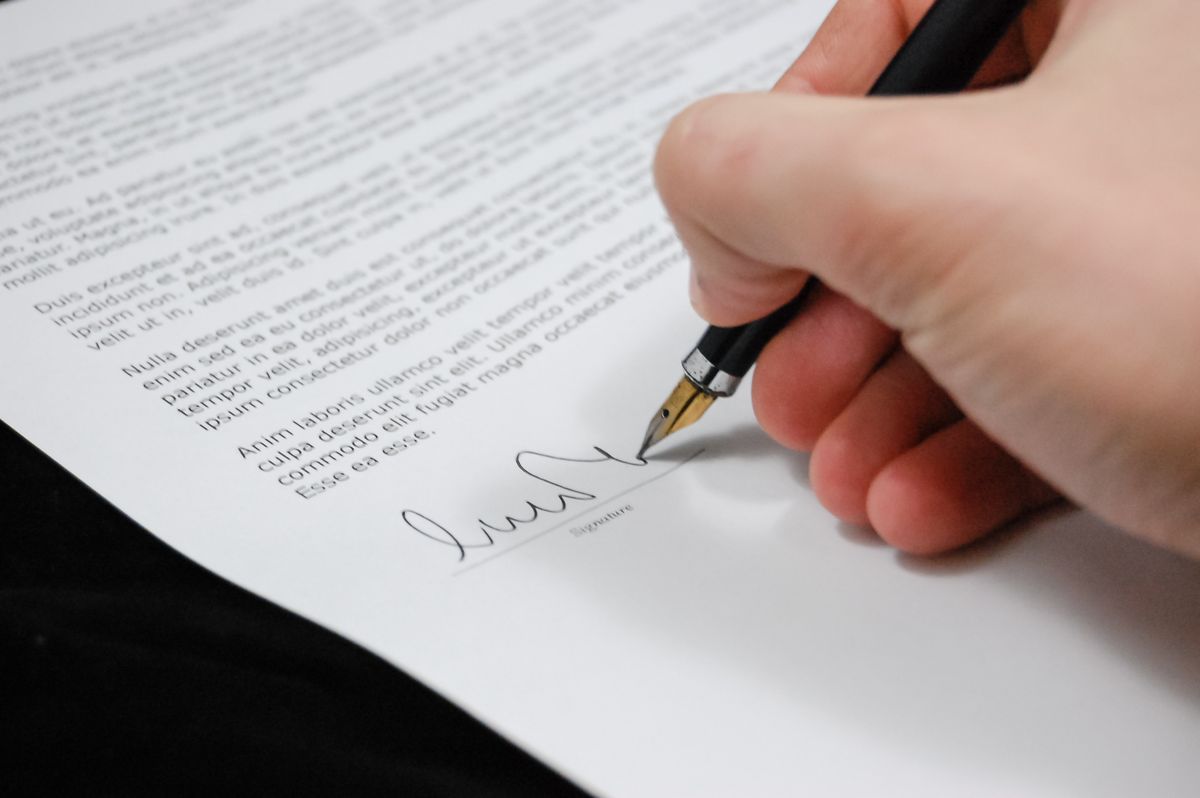
Every transfer of California real estate happens through a deed: one or two pages that decide who owns the property, with what protection, and what happens to it when the owner dies. A deed lawyer prepares those pages correctly, reviews them before you sign, and fixes them when someone else got them wrong.
VK Law prepares and reviews deeds across California, and coordinates every deed with the owner’s purchase, business, or estate plan. For a free consultation, call 877-780-4727.
What Is the Difference Between a Grant Deed and a Quitclaim Deed?
A grant deed carries built-in promises. Under Civil Code section 1113, using the word “grant” implies two covenants: that the grantor has not previously conveyed the same estate to anyone else, and that the estate is free from encumbrances the grantor made or suffered. Those covenants can be sued upon as if they had been written into the deed. A quitclaim deed makes no promises at all — it transfers whatever interest the signer happens to have, which may be nothing.
Key Takeaways
- The deed type controls what promises come with the transfer, and a quitclaim carries none.
- Deeding your home into your living trust is how the trust actually avoids probate for that property.
- A transfer on death deed passes property outside probate and stays revocable during life, but it transfers without covenant or warranty of title.
- The TOD deed statute is operative until January 1, 2032.
- Deed mistakes surface years later, usually during a sale or after a death, when they are hardest to fix.
The Deeds California Actually Uses
- Grant deed: the standard California transfer deed. The implied covenants under Civil Code section 1113 apply unless the deed expressly restrains them, and they may be sued upon in the same manner as if expressly inserted.
- Quitclaim deed: transfers whatever interest the signer has, with no promises at all. Useful for clearing clouds on title and moving interests between people who trust each other; risky as a substitute for a grant deed in a real sale.
- Interspousal transfer deed: moves property between spouses, commonly in refinances and divorces, with community property consequences worth understanding before signing.
- Trust transfer deed: moves property into or out of a revocable living trust. This is the deed that makes an estate plan real.
- Revocable transfer on death (TOD) deed: names a beneficiary who receives the property at the owner’s death, while the owner keeps full ownership and can revoke at any time. “Revocable transfer on death deed” is defined at Probate Code section 5614.
The Warranty Point Most People Miss
A grant deed and a TOD deed sit at opposite ends on this question, and the difference matters.
A grant deed carries the two implied covenants described above. A revocable transfer on death deed transfers the property without covenant or warranty of title — the statute says so expressly. The beneficiary takes whatever the owner had, subject to whatever was on title, with no promises attached.
That is not a reason to avoid a TOD deed. It is a reason to make sure title is clean before one is recorded, and to understand that a TOD deed is a succession tool rather than a way of assuring a beneficiary what they are getting.
Deeds and Your Estate Plan
Most Californians meet deed law through estate planning. A revocable living trust governs the property actually titled in the trust, which means a trust transfer deed, prepared and recorded, for each parcel.
Homes bought after the trust was signed, refinances that pulled the property out of trust, and inherited interests that never got re-deeded are the classic gaps. We prepare the deeds that fund the trust, and our guide on moving property in and out of a trust explains the mechanics.
How the deed vests title in the first place — joint tenancy, tenancy in common, community property, or trust — is its own decision, covered in our property title guide.
Transfer on Death Deeds: What to Know
The TOD deed can be useful where a single property is the main asset and a full trust is not warranted. Three points are worth knowing before choosing one.
It has an end date. The statute governing the execution, revocation, and effectiveness of revocable TOD deeds is operative until January 1, 2032. That does not mean an existing deed evaporates, but it does mean the framework is not permanent and should be revisited.
It has been amended. Assembly Bill 288, approved in July 2023, amended several of the governing sections, adjusted what real property qualifies, and brought stock cooperatives within the scheme through a new provision. Material written before that change may describe the older rules.
Execution and recording are strict. The requirements around signing, witnessing, notarisation, and the deadline for recording after acknowledgment are specific, and a deed that misses them may not work. Our deeds upon death guide covers when a TOD deed helps and when a trust does the job better.
Why Deed Mistakes Are Expensive
A deed is recorded once and then trusted for decades. Errors compound quietly: names that do not match the chain of title, legal descriptions copied wrong, vesting that contradicts the estate plan, transfers that were never recorded, and transfers that trigger property tax reassessment where a properly structured transfer might have avoided it.
California’s exclusions are narrow and the rules are technical, so tax questions deserve advice before signing, not after. Fixing a recorded mistake usually means a corrective deed; fixing a contested one can mean a quiet title action.
Recording, Transfer Tax, and the Paperwork Around the Deed
A deed does its job when it is recorded with the county recorder: recording is what puts the world on notice and protects the new owner against later claims.
Most recorded transfers travel with companions. A documentary transfer tax declaration is generally paid by the seller in a sale; many family and trust transfers claim exemptions that must be stated correctly. A Preliminary Change of Ownership Report goes to the assessor, who uses it to decide whether the transfer triggers property tax reassessment. Getting the companions wrong can cost far more than the deed itself.
Adding or Removing Someone From Title
The everyday deed jobs are also the ones with hidden edges.
Adding a spouse is usually an interspousal transfer with its own tax and community property implications. Adding a child to title as a shortcut inheritance is usually a mistake: it can be a taxable gift, expose the home to the child’s creditors and divorces, and often produces worse capital gains treatment than inheriting — a trust or TOD deed usually does the same job better.
Removing an ex-spouse after divorce, clearing a deceased joint tenant from title, and consolidating inherited fractional interests each have their own correct instrument. We match the tool to the situation before anything gets recorded.
Do You Actually Need a Lawyer for a Deed?
Being straight about this: no, not always. California does not require a lawyer to prepare or record a deed, and for a simple transfer between people who trust each other, with clean title and no tax consequences, a form and a trip to the recorder may be all it takes.
The risk is rarely in the recording. It is in choosing the wrong instrument, misdescribing the property, vesting title in a way that contradicts the estate plan, or triggering a reassessment or a gift that nobody priced in. Those consequences arrive years later, usually at a sale or a death, and by then the cheap fix has passed.
Deed work is generally a defined, modest scope of work rather than an open-ended matter. We discuss the fee before starting, and the first conversation is free — including the conversation where we tell you that you do not need us.
Deeds in San Mateo and on the Peninsula
Our office at 15 North Ellsworth Avenue, Suite 105, San Mateo, CA 94401 prepares and reviews deeds across the Peninsula, and deeds are recorded with the county recorder for the county where the property sits.
Two local realities shape this work. Peninsula property values mean a reassessment triggered by a poorly structured transfer carries a large and permanent annual cost, so the structure question is usually worth more than the deed. And a great many homes here were bought before a trust was created or refinanced after one was — which is exactly how a property ends up outside the trust that was supposed to govern it.
Details about the office are on our San Mateo page.
How We Help
We prepare grant, quitclaim, interspousal, trust transfer, and transfer on death deeds; review deeds before you sign; record them properly; and repair defective ones. Deed work runs alongside our California trust and estate practice, as part of the firm’s broader California real estate work.
To talk with VK Law about preparing or fixing a deed, call 877-780-4727. The consultation is free.
This page provides general information about California law and is not legal or tax advice; reading it or contacting the firm does not create an attorney-client relationship. Statutes governing deeds are amended from time to time and should be confirmed against current text. Every situation is different, and prior results do not guarantee a similar outcome.
Reviewed by Alan D. Khalfin, Partner and Managing Attorney, Vaksman Khalfin, PC (admitted in California). Last reviewed: 08/28/2026
Frequently Asked Questions
A grant deed carries two implied covenants under Civil Code section 1113: that the grantor has not previously conveyed the same estate to anyone else, and that the estate is free from encumbrances the grantor made or suffered. Those covenants may be sued upon as if written into the deed. A quitclaim deed makes no promises — it transfers whatever interest the signer has, which may be nothing.
Not as a legal requirement. For a straightforward transfer between people who trust each other, with clean title and no tax consequences, a form may be enough. The risk sits in choosing the wrong instrument, misdescribing the property, vesting in a way that contradicts the estate plan, or triggering a reassessment or gift — consequences that usually surface years later at a sale or a death.
Through a trust transfer deed, prepared and recorded for each parcel, along with the accompanying transfer tax declaration and change of ownership report. A trust governs only the property actually titled in it, so a property bought after the trust was signed, or pulled out during a refinance, needs a deed to bring it back in.
An instrument that names a beneficiary to receive real property at the owner's death, while the owner keeps full ownership and can revoke at any time. It is defined at Probate Code section 5614. Execution and recording requirements are strict, and the governing statute is operative until January 1, 2032.
No. A revocable transfer on death deed transfers the property without covenant or warranty of title. The beneficiary takes whatever the owner had, subject to whatever was on title. That is a reason to make sure title is clean before recording one.
It depends on the transfer and whether an exclusion applies. California's exclusions are narrow and the rules are technical, and the Preliminary Change of Ownership Report filed with the deed is what the assessor uses to decide. Because a reassessment is a permanent annual cost, this is worth confirming before signing rather than after.
Usually. A corrective deed handles most errors — wrong names, a bad legal description, incorrect vesting. Where the mistake is contested, or someone else now claims an interest, the remedy may be a quiet title action instead, which is considerably more involved.
Commonly through an interspousal transfer deed, which is frequently used in refinances and divorces. It carries community property and tax implications that are worth understanding before signing, since the deed changes more than the names on the page.
It is usually a mistake. Adding a child to title can be a taxable gift, exposes the home to that child's creditors and divorces, and often produces worse capital gains treatment than inheriting would. A trust or a transfer on death deed generally accomplishes the same goal without those consequences.
Deed work is generally a defined, modest scope rather than an open-ended matter, and we discuss the fee before starting. Recording fees and any transfer tax are separate and set by the county. The first conversation is free.