Nevada
Personal Injury Lawyers$10 MM+
Recovered for Clients
1000 +
Injured Clients
3.5 ×
Higher Compensation*

No Recovery.
No Fee.



Nevada differs from California in one respect that decides cases rather than merely adjusting them. In California, being partly at fault reduces a recovery and nothing more. In Nevada, there is a point at which a share of fault ends the claim entirely — and defence lawyers know exactly where that line sits.
This page explains that rule and where the line actually falls, the deadlines that apply, what a claim requires, and what compensation Nevada recognizes. Our attorneys serve injured people across Nevada from our Las Vegas office. For a free consultation, call 702-505-4444.
Primary Practice Areas
Nevada Personal Injury Law

Car Accidents
Hurt in a car accident anywhere in Nevada? VK Law explains how fault, insurance, and the two-year filing deadline work, and helps you pursue the compensation you may be owed.

Brain Injury
A serious brain injury can change a person’s memory, focus, and daily life, and its symptoms sometimes surface only after a crash or fall. VK Law helps injured people and families across Nevada understand their options and the state’s two-year filing deadline.

Wrongful Death
When a Nevada family loses someone because of another party’s negligence, a wrongful death claim can account for that loss. VK Law explains who may file and what Nevada law allows.

Slip and Fall
Slipped or fell at a Nevada casino, hotel, or resort? Nevada law lets you recover only if the property owner knew, or should have known, about the hazard and failed to act. VK Law helps you prove it.

Defective Products
A dangerous or defective product can cause serious injury without any warning. VK Law represents people across Nevada in strict product liability claims against the manufacturers and sellers responsible.

Motorcycle Accidents
Hurt in a Nevada motorcycle crash? VK Law represents injured riders across the state, cutting through the bias against motorcyclists to build a case on the evidence. Free consultation.
Truck Accidents
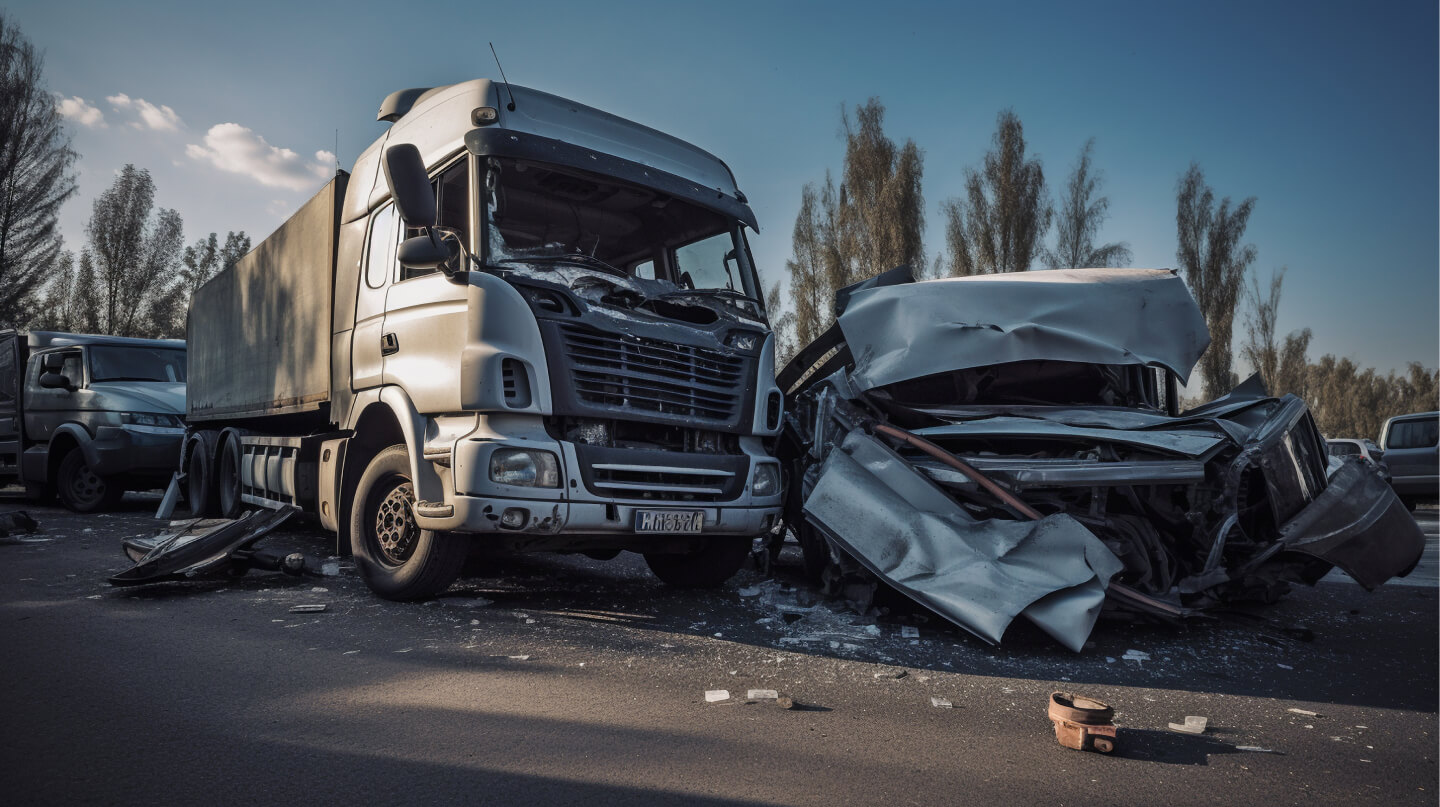
Truck crashes bring in federal safety rules and often more than one responsible company. VK Law helps injured people across Nevada hold the right parties accountable.
Bicycle Accidents
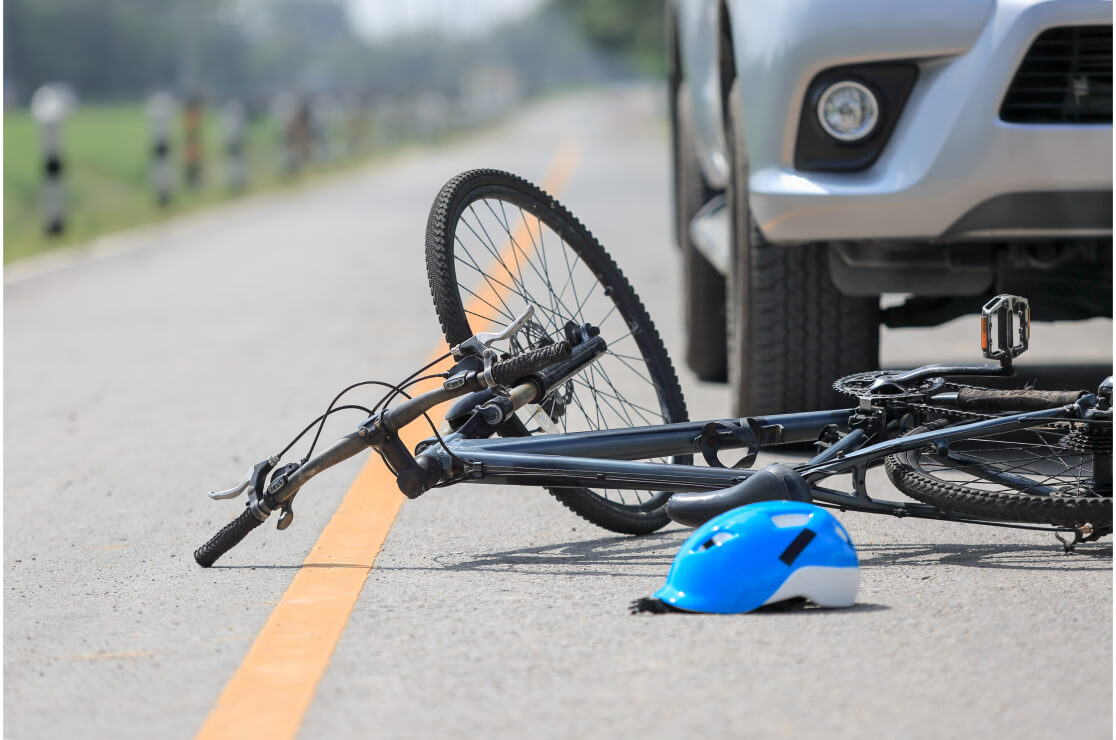
A bicycle or e-scooter rider has little protection when a car turns, drifts, or passes too close. VK Law helps injured Nevada riders understand their rights and pursue a fair recovery.

Pedestrian Accidents
Pedestrians hit by a car face serious injuries and hard questions about who had the right of way. VK Law represents injured walkers across Nevada.

Rideshare Accidents
Injured in an Uber or Lyft crash in Nevada? Nevada’s rideshare insurance changes with the app phase, and that decides which policy pays. VK Law helps passengers, drivers, and pedestrians work through it.

Guides & Resources
Guides to Nevada personal injury claims, with an overview of how injury cases work and links to common case types.
How Does Fault Work in a Nevada Injury Claim?
Nevada uses modified comparative negligence. Under NRS 41.141, an injured person’s own negligence does not bar recovery if that negligence was not greater than the negligence of the parties they are suing. The statute directs the judge to instruct the jury that the plaintiff may not recover if their comparative negligence is greater than the negligence of the defendant, or the combined negligence of multiple defendants. Most Nevada injury lawsuits must be filed within two years under NRS 11.190.
Key Takeaways
- Nevada bars recovery only where the injured person’s negligence is greater than the defendants’ — not where it merely equals it.
- Because the comparison is against the combined negligence of multiple defendants, identifying every responsible party can determine whether a claim survives at all.
- Most Nevada injury lawsuits must be filed within two years of the injury.
- There is no preset value for any claim, and no attorney can responsibly quote one.
- Injury cases are handled on a contingency-fee basis, and consultations are free.
Nevada's Comparative Negligence Rule
NRS 41.141(1) provides that in an action to recover damages for death or injury to persons or property in which comparative negligence is asserted as a defence, the comparative negligence of the plaintiff or the plaintiff’s decedent does not bar a recovery if that negligence was not greater than the negligence or gross negligence of the parties against whom recovery is sought.
Subsection (2) directs the judge to instruct the jury that the plaintiff may not recover if the plaintiff’s comparative negligence is greater than the negligence of the defendant, or the combined negligence of multiple defendants. Where the jury finds the plaintiff entitled to recover, it returns the total damages without regard to comparative negligence, and the apportionment is applied to that figure.
Where the line actually falls
This matters and is frequently stated incorrectly. The statutory test is “not greater than.” An injured person whose share of fault is found equal to the defendants’ has negligence that is not greater than theirs, and so is not barred. It is only when their share exceeds the other side’s that recovery is lost.
| Finding on the injured person’s share of fault | Result under NRS 41.141 |
|---|---|
| Less than the defendants’ combined negligence | Recovery allowed, reduced by that share |
| Equal to the defendants’ combined negligence | Not greater than — recovery allowed, reduced by that share |
| Greater than the defendants’ combined negligence | Recovery barred |
A number of published summaries state that a plaintiff who is “50% or more at fault” recovers nothing. That does not match the statutory language, and the distinction is not academic — an even split is precisely the finding a jury reaches when both sides behaved carelessly.
Why every defendant matters
The comparison is against the combined negligence of the parties from whom recovery is sought. Identifying an additional responsible party therefore does two things: it adds available insurance, and it raises the total against which the injured person’s share is measured. A claim that would fail against one defendant can survive against two. This is a structural reason to investigate thoroughly and early, rather than accepting the first account of who was involved.
Deadlines
| Situation | General rule |
|---|---|
| Most injury claims | Two years from the injury, under NRS 11.190 |
| Wrongful death | Governed by the Nevada Wrongful Death Act, NRS 41.085, which sets out who may bring a claim |
| Claims involving a public entity | Nevada has its own procedure for claims against the State and its political subdivisions, with requirements that differ from an ordinary claim |
| Claims involving a health care provider’s professional negligence | A separate limitation provision applies under NRS Chapter 41A |
| Injured person is a minor | Nevada’s tolling provisions may pause a limitation period |
Because the applicable deadline depends on who may be responsible, and that is often unclear early, confirming it is worth doing before a decision has been made about whether to bring a claim at all.
The practical deadline is earlier still. Surveillance video is overwritten, vehicles are repaired or salvaged, roadway and premises conditions are changed, and witnesses become unreachable — all long before two years have passed.
What a Negligence Claim Requires
- Duty — the other party owed a duty to use reasonable care
- Breach — they failed to use it
- Causation — that failure was a substantial factor in causing the injury
- Damages — the injury produced losses that can be documented
Causation is where most disputes concentrate, particularly where treatment began some time after the incident or where a prior injury affected the same part of the body. Some claims work differently: a product liability claim can proceed on a theory that does not require proving carelessness.
The Claims We Handle
Our Nevada injury practice covers motor vehicle collisions, including commercial trucks and rideshare vehicles; motorcycle, bicycle, and pedestrian incidents; premises liability, including hotel, casino, resort, and retail properties; defective products; catastrophic injuries; and wrongful death claims brought under NRS 41.085 by those the statute permits.
Clark County’s hospitality economy produces a distinctive mix. Premises claims frequently involve large properties with in-house security and risk-management teams that begin documenting an incident immediately, and with surveillance systems that record continuously and overwrite on their own schedule. Visitors injured here often return home before the claim develops, which raises its own questions about treatment records, and about where and how a claim proceeds.
What Nevada Recognizes as Compensation
There is no preset value for an injury claim, and no attorney can responsibly quote a figure. What a claim is worth depends on the evidence: the nature and permanence of the injury, the documented care, the effect on work and daily life, the fault apportioned to each party, and the insurance actually available. The categories Nevada recognizes include:
- Past and future medical expenses, including rehabilitation and ongoing treatment
- Lost income and reduced future earning capacity
- Property damage and related costs
- Pain, suffering, and loss of enjoyment of life
Nevada also provides for exemplary and punitive damages in defined circumstances, subject to statutory limitations, and separate rules apply to claims based on the professional negligence of health care providers. Whether any of these apply depends entirely on the facts.
Dealing With Insurers
An adjuster usually makes contact quickly, often before the extent of an injury is known. The adjuster for the other party represents that party’s insurer, not you. A recorded statement is not required by law, and what is said in one can later be used to argue an injury was minor or unrelated.
In Nevada that has a sharper edge than elsewhere. Because a sufficient share of fault ends a claim outright rather than merely reducing it, an adjuster has reason to build a fault narrative early. Statements given before anyone has investigated can contribute to exactly the finding that bars recovery.
Injury Claims in Las Vegas and Clark County
We work with injured people across Clark County, including Henderson, North Las Vegas, Boulder City, and Mesquite, as well as Reno, Sparks, Carson City, and Elko. Civil matters for Clark County are generally heard in the Eighth Judicial District Court.
The local pattern reflects the region: resort corridor and Strip premises incidents, collisions on I-15 and the 215 Beltway, freight moving through on the interstate network, and a large visitor population injured away from home. Details about the office are on our Las Vegas office page, and our Nevada practice page covers our other work in the state.
How We Help
Vaksman Khalfin, PC investigates how an incident happened, identifies every party who may be responsible — which under NRS 41.141 affects whether a claim survives, not merely what it is worth — sends preservation demands before surveillance and records are lost, works with treating providers to document the injury and its effects, and handles the insurers directly. If a fair resolution is not offered, we are prepared to litigate.
Our Nevada practice is led by Robert B. Vaksman, who is admitted in Nevada, together with Alan D. Khalfin. We handle injury cases on a contingency-fee basis: there is no upfront cost, and attorney’s fees are owed only if we recover compensation for you. To talk with a Nevada personal injury lawyer, call 702-505-4444 or schedule a free consultation. We also handle Nevada trust and estate matters, and injury claims in California and New York.
This page provides general information about Nevada law and is not legal advice; reading it does not create an attorney-client relationship. Every case is different, and prior results do not guarantee a similar outcome.
Reviewed by Robert B. Vaksman, Partner, Vaksman Khalfin, PC (admitted in Nevada). Last reviewed: 08/12/2026
Robert B. Vaksman, Esq.
Founding Partner
“Some cases are easier than others, but this doesn’t matter at Vaksman Khalfin, because we have the resources to help our clients no matter what is at stake, especially if it’s hard."
ALAN D. KHALFIN, ESQ.
Partner & Managing Attorney
"People call me when they need to plan, but also when something terrible has happened and they need help. It is personal to my clients, so it is personal to me. We have to help: no matter what."

What You Can Expect
From Vaksman Khalfin Personal Injury Attorneys

Free Consultation
At Vaksman Khalfin, PC, your journey to justice begins with a free consultation. We understand the financial strain that can accompany a personal injury case, so we offer this initial meeting at no cost to you. This allows us to assess your case, discuss your options, and chart a path forward. Also, we can develop an effective case strategy for your case.

You Only Pay Us if We Reach a Settlement
We operate on a contingency fee basis, meaning you only pay us if we successfully reach a settlement on your behalf. This commitment underscores our confidence in our ability to secure the compensation you deserve. We work on your case to ensure that we zealously represent our clients and protect their legal rights.

Exceptional Attorneys and Case Managers
Our team comprises seasoned attorneys and dedicated case managers who bring a wealth of experience to your case. From negotiation to litigation, we leverage our expertise to build a strong case tailored to your unique situation. We are always here to answer any questions you have about the status of your case.

Medical Providers Won't Receive Payment Until We Finalize Your Case
We understand the financial strain that medical bills can cause. Our commitment is to ensure that your medical providers won't receive payment until we've finalized your case, allowing you to focus on your recovery without added financial stress. We can negotiate with doctors who treat on a lien basis. Once your case settles, we can negotiate those liens down so you can preserve more of your settlement funds.
What Our Clients Say



"The entire process was seamless, from start to finish. Team was considerate and incredibly supportive throughout my case. My doctor pointed me their way, and I'm glad he did – these guys really take your side and ensure you get the justice you deserve."

"It was a breeze working with them on my injury claim! Everyone there, especially Mr. Vaksman, were so approachable and patient with all of my questions. After talking to numerous other lawyers and reading countless reviews, it became clear that the quality and care VK offers is simply unmatched."

How it works
We will fight for your rights.
Complimentary consultation
We provide a complimentary consultation regarding your matter. If we're a mutual fit, you'll sign an engagement agreement before we get started. Remember, we don't get paid unless and until you do.

Working with a legal team
Our legal team will work with you and your medical provider to ensure you're effectively treated. After, we serve a pre-litigation demand and negotiate with the defendant. If we don't get what we believe you deserve, we consider going to court.
We will fight for you
If pre-litigation efforts fail, we'll continue fighting for you in court. Going to trial may take a while, but it ensures you get what you deserve.

Nevada Personal Injury Frequently Asked Questions Frequently Asked Questions
Yes, provided your negligence was not greater than that of the parties you are suing. NRS 41.141 bars recovery only where the plaintiff's comparative negligence is greater than the negligence of the defendant or the combined negligence of multiple defendants. Where recovery is allowed, it is reduced by the plaintiff's share.
The statutory test is whether the plaintiff's negligence was "not greater than" the defendants'. An equal share is not greater, so recovery is not barred on that basis. Summaries stating that a plaintiff who is "50% or more at fault" recovers nothing do not track the statutory language.
California uses pure comparative fault, where a share of responsibility reduces a recovery but never eliminates it. Nevada uses modified comparative negligence, where a sufficient share ends the claim entirely. The same facts can therefore produce very different outcomes depending on which state's law applies.
Most injury lawsuits must be filed within two years of the injury under NRS 11.190. Different provisions apply to claims involving a public entity, to claims based on the professional negligence of a health care provider, and where the injured person is a minor.
Considerably. The comparison under NRS 41.141 is against the combined negligence of the parties from whom recovery is sought, so adding a responsible party both increases the available insurance and raises the total against which your share is measured. A claim that fails against one defendant can succeed against two.
You are not required by law to give one. Because a sufficient share of fault ends a Nevada claim rather than merely reducing it, statements made before anyone has investigated carry more risk here than in states using pure comparative fault. It is reasonable to speak with a lawyer first.
There is no preset amount, and no lawyer can responsibly quote one. Value depends on the nature and permanence of the injury, the documented medical care, the effect on work and daily life, the fault apportioned to each party, and the insurance available.
Generally yes. Being a visitor does not prevent a claim arising from an incident in Nevada, though it raises practical questions about treatment records created in another state and about how the matter proceeds. This is common enough here that it is worth raising at the first conversation.
These properties typically have in-house security and risk-management teams that begin documenting immediately, and surveillance systems that overwrite on their own schedule. A preservation request early is often the difference between having footage and not.
Vaksman Khalfin, PC handles injury cases on a contingency-fee basis: there is no upfront cost, and attorney's fees are owed only if we recover compensation for you. Initial consultations are free.
SUBMIT YOUR CONTACT DETAILS 100% Free Consultation, Always. Free Consultation.