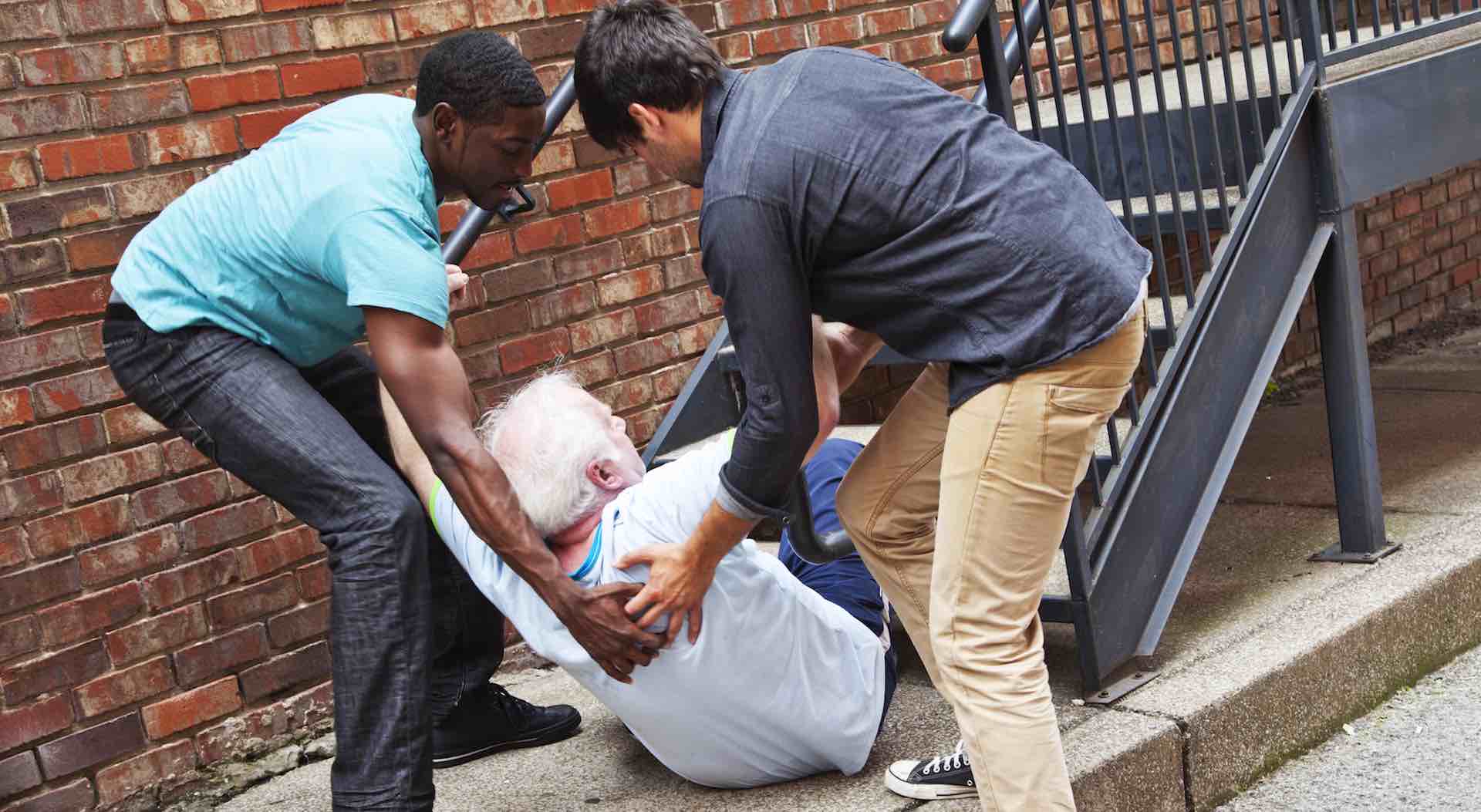
Property owners are not responsible every time someone falls. They are responsible when they knew, or should have known, about a hazard and did not deal with it. That single question — notice — decides most slip and fall claims, and it is answered by records that often disappear within days.
This page explains what premises liability requires in California, how notice is established, what evidence matters and how quickly it degrades, and what compensation the law recognizes. Our California personal injury attorneys handle these claims from our San Mateo office. For a free consultation, call 650-250-0705.
When Is a Property Owner Responsible for a Fall?
Under California Civil Code section 1714, everyone is responsible for injury caused to another by want of ordinary care in the management of their property. In a slip and fall claim, that generally means showing the owner or occupier controlled the property, that a dangerous condition existed, that they knew or should have known about it and had a reasonable opportunity to fix or warn about it, and that this was a substantial factor in causing the injury. Most California lawsuits must be filed within two years, with a much shorter timeline where a public entity is involved.
Key Takeaways
- Falling on someone’s property does not by itself establish responsibility — notice does.
- Notice can be actual (they knew) or constructive (the condition existed long enough that reasonable inspection would have found it).
- Surveillance video, incident reports, and inspection logs are the evidence that decides these cases, and they are routinely overwritten or discarded.
- California uses pure comparative fault, so being partly responsible reduces a recovery rather than barring it.
- A fall on public property runs through the Government Claims Act on a much shorter timeline than two years.
What California Law Requires
Civil Code section 1714(a) provides that everyone is responsible not only for the result of their willful acts, but also for an injury occasioned to another by their want of ordinary care or skill in the management of their property or person — except so far as the injured person has, willfully or through want of ordinary care, brought the injury upon themselves.
That last clause is where comparative fault comes from, and it is built into the same statute that creates the duty. In practice, a premises liability claim generally requires showing:
| Element | What it means in a fall case |
|---|---|
| Control | The defendant owned, leased, occupied, or controlled the property. In a leased commercial space this may be more than one party. |
| A dangerous condition | Something about the property presented an unreasonable risk to people using it in the expected way. |
| Notice | They knew about the condition, or it existed long enough that reasonable inspection would have revealed it. |
| Failure to act | Having had a reasonable opportunity, they did not repair the condition or warn about it. |
| Causation and harm | The failure was a substantial factor in causing an injury that produced documented losses. |
Notice Is Usually the Whole Case
Defence counsel rarely argue that the floor was dry. They argue that the spill appeared moments before, that nobody could have known, and that the store’s inspection routine was reasonable. Two paths answer that.
Actual notice means someone knew. An employee reported it, a prior customer complained, a work order exists, the condition had been reported before. This is proven with documents and testimony.
Constructive notice means the condition existed long enough that a reasonable inspection regime would have found it. This is where inspection logs matter enormously — a business that sweeps hourly and logs it is in a different position from one that cannot say when the area was last checked, or whose log was filled in afterwards. The absence of any inspection record is itself informative.
Where a hazard arises from how a business chooses to operate — self-service displays, a produce section, an entrance that collects rainwater without matting — the argument shifts from whether they knew about one spill to whether the operation itself created a foreseeable and recurring risk that was not reasonably managed.
The Evidence Clock
This is the practical reason slip and fall claims reward early action, and it has nothing to do with the filing deadline.
| Evidence | What happens to it |
|---|---|
| Surveillance video | Many systems overwrite on a short cycle. Once gone, the clearest record of what happened and how long the hazard was present is gone with it. |
| The hazard itself | Spills are cleaned, mats are added, stairs are repaired, lighting is fixed — often within hours, and sometimes because of the fall. |
| Incident reports | Created at the time, but held by the business. What was recorded contemporaneously is difficult to revise later. |
| Inspection and maintenance logs | Retained under the business’s own policy, not for your benefit. |
| Witnesses | Other customers are unidentifiable after the fact; staff move on. |
A preservation letter sent early puts the property owner on notice not to destroy material relevant to the incident. Before that, photographs of the condition, the surrounding area, the lighting, and any absent warning signage are worth taking at the scene where possible — as is asking for the incident report and noting the names of employees involved.
Where These Claims Arise
- Retail stores, restaurants, and grocery premises
- Apartment complexes and common areas, including stairwells and walkways
- Hotels, gyms, and other commercial facilities
- Parking lots and garages, including surface defects and lighting
- Construction and work sites
- Sidewalks and public buildings, which raise the public entity questions below
- Private residences
Common conditions include wet or recently treated floors without warning, spills and tracked-in water left unattended, uneven flooring and unexpected changes in level, damaged or poorly lit stairs, missing or broken handrails, cracked walkways and parking surfaces, obstructions in aisles, and inadequate lighting that conceals a hazard.
Falls can produce serious injuries, including traumatic brain injuries. Where a fall is fatal, certain surviving family members may be able to bring a wrongful death claim, which follows its own rules about who may sue.
Falls on Public Property
A fall on a city sidewalk, in a public building, at a transit station, or on other government property follows a different process. A written claim generally must be presented to the responsible public entity under California’s Government Claims Act before any lawsuit can be filed, on a timeline much shorter than the two years that applies to private defendants.
Identifying the correct entity is its own problem — a stretch of sidewalk may be maintained by a city, a county, a transit district, or an adjacent property owner depending on local rules. That determination needs to happen early, because the claim window can close while it is still being worked out.
Deadlines
| Situation | General rule | Source |
|---|---|---|
| Most claims against a private property owner | Two years from the date of injury | Code Civ. Proc., § 335.1 |
| Claims involving a public entity | A written claim generally must be presented to the entity before any lawsuit, on a much shorter timeline | California’s Government Claims Act |
Shared Fault
Insurers argue that the injured person was not watching where they were going, was distracted by a phone, was wearing unsuitable footwear, or ignored a sign. California follows a pure comparative fault approach: being partly responsible reduces a recovery by that share rather than barring the claim. Because this is the most common defence in premises cases, how the condition and the circumstances are documented matters a great deal.
What California Recognizes as Compensation
There is no preset value for a slip and fall claim, and no attorney can promise a figure. What a claim is worth depends on the evidence: the nature of the injury, the documented care, the effect on work and daily life, the fault attributed to each party, and the insurance available. The categories California recognizes include:
- Past and future medical expenses, including surgery, therapy, and ongoing treatment
- Lost income and reduced future earning capacity
- Pain, suffering, and loss of enjoyment of life
- Other out-of-pocket costs related to the injury
- Loss of consortium, in claims brought by a spouse
Slip and Fall Claims in San Mateo and on the Peninsula
Our office at 15 North Ellsworth Avenue, Suite 105, San Mateo, CA 94401 works with injured people across the Peninsula. The claims we see reflect the built environment here: older apartment stock with stairwells and exterior walkways, retail and grocery premises along El Camino Real and in downtown San Mateo, Burlingame, and Redwood City, parking structures serving transit and shopping, and sidewalk defects where mature street trees have lifted paving.
That last category raises the public entity question directly, and responsibility for a given stretch of sidewalk is not always obvious. Civil matters for this area are generally heard in the San Mateo County Superior Court.
Details about the office are on our San Mateo page, and related explanations are collected in our California personal injury guides.
How Our California Slip and Fall Lawyers Can Help
Vaksman Khalfin, PC can send preservation demands before video is overwritten, obtain incident reports and inspection records, identify every party who may be responsible — which in a leased commercial space is often more than one — document the injury and its effects with treating providers, assess whether a public entity claim needs to be presented within its shorter window, and handle the insurers directly. If a fair resolution is not offered, we are prepared to litigate.
The firm’s personal injury practice is led by Alan D. Khalfin and Robert B. Vaksman. We handle these cases on a contingency-fee basis: there is no upfront cost, and attorney’s fees are owed only if we recover compensation for you. To talk with a California slip and fall lawyer, call 650-250-0705 or schedule a free consultation.
This page provides general information about California law and is not legal advice; reading it does not create an attorney-client relationship. Every case is different, and prior results do not guarantee a similar outcome.
Reviewed by Alan D. Khalfin, Partner and Managing Attorney, Vaksman Khalfin, PC (admitted in California). Last reviewed: 08/13/2026
California Slip and Fall Frequently Asked Questions Frequently Asked Questions
Generally when they controlled the property, a dangerous condition existed, they knew or should have known about it and had a reasonable opportunity to fix or warn about it, and that failure was a substantial factor in causing the injury. Civil Code section 1714 provides that everyone is responsible for injury caused by want of ordinary care in the management of their property.
Actual notice means the owner knew about the hazard — an employee saw it, someone reported it, or a work order exists. Constructive notice means the condition existed long enough that a reasonable inspection would have found it. Inspection and maintenance logs are usually central to establishing the second.
Possibly. A missing warning is relevant, but the question remains whether the owner knew or should have known about the spill and had a reasonable opportunity to address it. A spill that appeared seconds earlier is treated very differently from one that had been there for an hour.
Most claims against private property owners must be filed within two years of the injury under Code of Civil Procedure section 335.1. If you fell on public property, a written claim generally must be presented to the responsible entity first under the Government Claims Act, on a much shorter timeline.
That is likely a public entity claim, which requires a written claim to the entity before any lawsuit and runs on a much shorter timeline. Determining which entity is responsible for a particular stretch of sidewalk can take time, which is why these situations call for prompt attention.
California uses pure comparative fault. Being partly responsible reduces a recovery by that share of fault rather than barring the claim.
There is no preset amount, and no lawyer can promise a figure. Value depends on the nature of the injury, the documented medical care, the effect on work and daily life, the fault attributed to each party, and the insurance available. An attorney can explain which categories of loss may apply.
Surveillance video, incident reports, and inspection logs usually decide these cases. Many camera systems overwrite on a short cycle, and the hazard itself is often cleaned or repaired within hours. Photographs taken at the scene and an early preservation request can make the difference.
You are not required by law to give a recorded statement. The adjuster represents the property owner's insurer, and statements given before the extent of an injury is known can later be used to argue it was minor or unrelated. It is reasonable to speak with a lawyer first.
Vaksman Khalfin, PC handles these cases on a contingency-fee basis: there is no upfront cost, and attorney's fees are owed only if we recover compensation for you. Initial consultations are free.