In most collisions, the question is who was at fault. In a rideshare collision, there is a second question that often matters just as much: what the driver’s app was doing at the moment of impact. California sets different insurance requirements for each stage of a rideshare trip, and the difference between them is substantial.
This page explains those coverage periods, how they determine which policy responds, what happens depending on whether you were a passenger, another driver, or a pedestrian, and the deadlines that apply. Our California personal injury attorneys handle these claims from our San Mateo office. For a free consultation, call 650-250-0705.
Who Pays After an Uber or Lyft Accident in California?
It depends on which coverage period the driver was in. The California Public Utilities Commission regulates transportation network companies and sets tiered insurance requirements. When the app is on but no ride has been accepted (Period 1), the TNC must provide primary coverage of at least $50,000 per person, $100,000 per incident, and $30,000 for property damage, plus at least $200,000 in excess coverage. Once a ride is accepted and until the passenger exits (Periods 2 and 3), a $1,000,000 primary commercial policy applies. When the app is off, only the driver’s personal insurance is in play.
Key Takeaways
- California regulates Uber and Lyft as transportation network companies through the CPUC, which is unusual — most states do not.
- Which insurance responds turns on the app’s status at the moment of the collision, not on who was in the car.
- The gap between Period 1 and Period 2 coverage is large, which is why disputes concentrate on Period 1.
- Passengers are covered during the trip regardless of which driver was at fault.
- Most California injury lawsuits must be filed within two years, with a much shorter timeline where a public entity may be involved.
California's Rideshare Coverage Periods
The CPUC publishes the insurance requirements that transportation network companies must meet:
| Period | What the driver is doing | Required coverage |
|---|---|---|
| App off | Not logged in; driving personally | No TNC coverage. The driver’s personal auto policy is the only source. |
| Period 1 | Logged in and available, but no ride accepted | Primary insurance of at least $50,000 for death and personal injury per person, $100,000 per incident, and $30,000 for property damage, plus excess coverage of at least $200,000 per occurrence |
| Period 2 | Ride accepted, en route to collect the passenger | Primary commercial insurance of $1,000,000 |
| Period 3 | Passenger in the vehicle, until they exit | Primary commercial insurance of $1,000,000, plus uninsured and underinsured motorist coverage of $1,000,000 from the moment the passenger enters until they exit |
The practical consequence is stark. A collision one second after a driver accepts a request sits in a different insurance world from one a second before. That is why the period in effect is contested more often than fault in some rideshare claims.
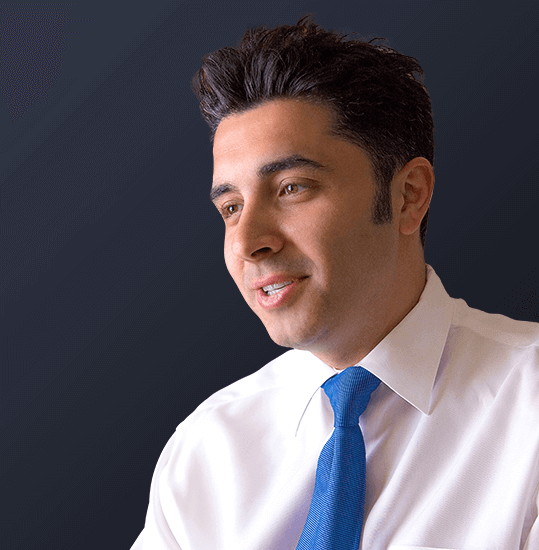
Robert B. Vaksman, Esq.
Founding Partner
“Some cases are easier than others, but this doesn’t matter at Vaksman Khalfin, because we have the resources to help our clients no matter what is at stake, especially if it’s hard."
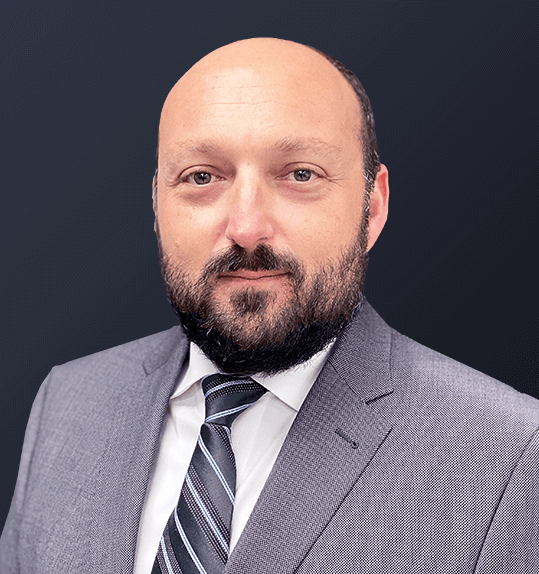
ALAN D. KHALFIN, ESQ.
Partner & Managing Attorney
"People call me when they need to plan, but also when something terrible has happened and they need help. It is personal to my clients, so it is personal to me. We have to help: no matter what."
Learn more about Uber And Lyft Accidents in California
- Best Lawyer to Sue Uber: Which Claims Reach the Company Itself, and How to Choose Counsel
- Best Rideshare Accident Lawyer for Your Case: Questions That Test Rideshare Knowledge
- Car Accident While Riding in Uber: Who Pays the Passenger in Each Crash Scenario
- Is Uninsured Motorist Coverage Worth It in California? What the Insurance Code Says, Including for Rideshare Riders
- Lyft Accident Attorney in California: A Timeline for the First 30 Days After a Crash
- Lyft Accident Lawyer in California: How a Rideshare Injury Claim Moves From Report to Resolution
- Rideshare Accident Lawyer in California: Claims for Drivers, Pedestrians, Cyclists, and Other Motorists
- Rideshare Insurance in California: How the Statute Divides Coverage Between Drivers, Personal Insurers, and Uber or Lyft
- Uber Accident Lawyer in California: Which Insurance Applies, and How the Driver’s App Status Is Proven
- Uninsured Motorist Claim in California: Four Kinds of Claims and What Each One Requires
Why Period 1 Is Where Disputes Concentrate
Period 1 produces a squeeze. The TNC’s obligation is comparatively modest, and the driver’s personal auto policy typically excludes commercial activity — most personal policies are not written to cover driving for hire. Injured people can find the personal insurer declining on the basis that the driver was working, while the TNC insurer questions whether the driver was genuinely available on the platform.
Resolving that requires evidence about the app rather than about the collision: trip records, timestamps, the driver’s account status, and platform data. Those records sit with the company, not with the parties, which is a practical reason to raise a preservation request early rather than after positions have hardened.
What Applies Depending on Who You Are
If you were a passenger
You were in Period 3, so the $1,000,000 primary commercial coverage applies, along with the $1,000,000 uninsured and underinsured motorist coverage that runs from entering the vehicle until exiting it. That matters because it does not depend on which driver was responsible — if another motorist caused the collision and carried little or no insurance, the UM and UIM coverage may still respond. A passenger is rarely at fault in any meaningful sense.
If you were in another vehicle
Which policy responds depends on the rideshare driver’s period, and on whether they were responsible at all. If the rideshare driver was not at fault, your claim runs against the responsible party in the ordinary way, and your own car accident coverage may come into play if that party is uninsured or underinsured.
If you were a pedestrian or cyclist
The same period analysis applies. Rideshare pickups and drop-offs frequently happen at the curb, in bike lanes, and in loading zones, so pedestrian and bicycle claims involving a door opening or a sudden stop are a recurring pattern in these cases.
If you were the rideshare driver
Where another motorist was responsible, you may have a claim against them, and the TNC’s uninsured and underinsured motorist coverage may apply depending on the period. Rideshare companies generally treat drivers as independent contractors rather than employees, which shapes what other avenues may exist. A lawyer can explain how that applies to particular circumstances.
Deadlines That May Apply
| Situation | General rule | Source |
|---|---|---|
| Most injury claims against a private party | Two years from the date of injury | Code Civ. Proc., § 335.1 |
| Claims involving a public entity | A written claim generally must be presented to the entity before any lawsuit, on a timeline much shorter than the general two-year period | California’s Government Claims Act |
| Uninsured or underinsured motorist claims | Governed by the terms of the applicable policy, which commonly impose their own notice requirements | The policy |
What You Can Expect

Free Consultation
At Vaksman Khalfin, we value transparency and offer a free initial consultation. We’ll assess your case, outline achievable outcomes, and chart a probable course of action without any financial obligation on your part.

EXCEPTIONAL ATTORNEYS AND CASE MANAGERS
A professional attorney with a case manager will be assigned to your case to ensure dedicated service and personalized attention. This loyal team is your consistent point of contact and handles all your concerns personally.

YOU ONLY PAY US IF WE REACH A SETTLEMENT
Your satisfaction is our utmost priority. Our payment structure follows a, "No win, no fee," policy. Our policy guarantees our fees are contingent on a successful outcome for your case.

MEDICAL PROVIDERS WON’T RECEIVE PAYMENT UNTIL WE FINALIZE YOUR CASE
We believe in a complete and fair resolution of your case before medical providers get paid. At Vaksman Khalfin, your medical needs are our top priority. Our focus remains on achieving the best outcome for your case.
How it works
We will fight for your rights
Complimentary consultation
We provide you with a complimentary consultation with regard to your matter. If we're mutually interested to work with each other, you will sign an engagement agreement, after which we will get started. Remember, we don't get paid unless and until you get paid.

Working with a Legal team
Our legal team will work with you and your medical providers to ensure that you are effectively treated, as best as medically possible and necessary. Afterward, we serve a pre-litigation demand and negotiate with the defendant. If we don't get what we believe you are owed, we consider going to court.
We will fight for you
If pre-litigation efforts fail, in certain situations, we will continue fighting for you in court. This may take a while, but it will ensure that you get what you deserve.
Who May Be Responsible
- The rideshare driver
- Another motorist, and in some cases their employer where they were acting within the scope of employment
- A commercial vehicle operator or motor carrier, as covered on our truck accident page
- A public entity responsible for a roadway or its condition
- A vehicle or component manufacturer where a defective product may have failed
Whether any of these parties is legally responsible is a question of evidence rather than assumption. Identifying them early affects which insurance may be available and which deadlines govern.
Shared Fault and Damages
California follows a pure comparative fault approach: someone found partly responsible is not barred from recovering, and the recovery is reduced by that share.
There is no preset value for a rideshare claim, and no attorney can promise a figure. The categories California recognizes include past and future medical expenses, lost income and reduced earning capacity, property damage, pain and suffering and loss of enjoyment of life, and loss of consortium in claims brought by a spouse. Serious collisions can produce catastrophic outcomes including traumatic brain injuries, and where a collision is fatal certain surviving family members may be able to bring a wrongful death claim.
Practical Steps That Help a Rideshare Claim
Because these claims turn on records held by the platform, a few things are more useful here than in an ordinary collision. Screenshot the trip in the app, including the driver’s name, the vehicle, and the trip timestamps, before the record scrolls out of easy reach. Report the incident through the app, which creates a record of the trip’s status. Note whether a passenger was in the vehicle and whether the driver appeared to be en route to a pickup. And be aware that an early call from a claims representative may come before anyone has established which period applies.
Rideshare Collisions in San Mateo and Around SFO
Our office at 15 North Ellsworth Avenue, Suite 105, San Mateo, CA 94401 serves people injured across the Peninsula. This county carries unusually heavy rideshare traffic because San Francisco International Airport sits within it, and airport work concentrates exactly the situations where period disputes arise — drivers circling while logged in and waiting for a request, queueing in staging areas, and moving through terminal roadways under time pressure.
Beyond the airport, collisions happen on US-101 and I-280, on El Camino Real, and at curbside pickups on downtown streets in San Mateo, Burlingame, Redwood City, and Millbrae. Civil matters for this area are generally heard in the San Mateo County Superior Court, and where a city, the county, or an airport authority may share responsibility for a roadway condition, the Government Claims Act timeline applies.
Details about the office are on our San Mateo page, and related explanations are collected in our California personal injury guides.
How Our California Uber and Lyft Accident Attorneys Can Help
Vaksman Khalfin, PC can establish which coverage period applied and press for the platform records that prove it, identify every party who may be responsible and every policy that may respond, work with treating providers to document the injury and its effects, and handle the insurers — including the situation where a personal auto insurer and a TNC insurer are each pointing at the other. If a fair resolution is not offered, we are prepared to litigate.
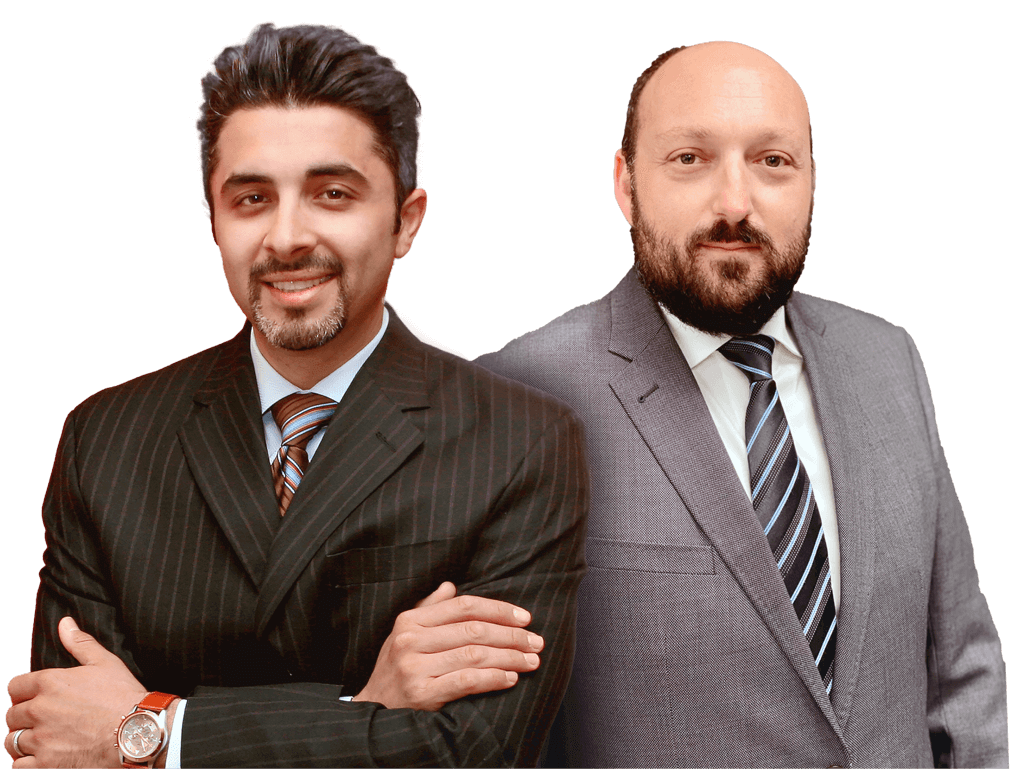
The firm’s personal injury practice is led by Alan D. Khalfin and Robert B. Vaksman. We handle these cases on a contingency-fee basis: there is no upfront cost, and attorney’s fees are owed only if we recover compensation for you. To talk with a California Uber accident attorney, call 650-250-0705 or schedule a free consultation.
This page provides general information about California law and is not legal advice; reading it does not create an attorney-client relationship. Insurance requirements are set by regulation and can change. Every case is different, and prior results do not guarantee a similar outcome.
Reviewed by Alan D. Khalfin, Partner and Managing Attorney, Vaksman Khalfin, PC (admitted in California). Last reviewed: 08/13/2026



"I retained Vaksman Khalfin after my car accident. Right away, I knew I was in good hands because communication was clear and fast! They went above and beyond by negotiating my bills, and I ultimately got more than I expected. Thank you!"

"After being in a major accident, I didn’t know what to do. I never had to hire a lawyer, and was nervous about the process. Fortunately, I found Vaksman Khalfin who helped coordinate my medical care and finalize a very fair settlement. Everyone at their law firm was kind, caring and patient with all of my questions."

Uber and Lyft Accident Frequently Asked Questions Frequently Asked Questions
If you were a passenger, the trip was in Period 3, so the TNC's $1,000,000 primary commercial coverage applies, together with $1,000,000 of uninsured and underinsured motorist coverage that runs from the moment you enter the vehicle until you exit it. That coverage does not depend on which driver was responsible.
Per the CPUC, Period 1 is when the driver is logged in but has not accepted a ride, and requires primary coverage of at least $50,000 per person, $100,000 per incident, and $30,000 for property damage, plus at least $200,000 in excess coverage. Period 2 begins when a ride is accepted, and Period 3 runs while a passenger is in the vehicle; both require $1,000,000 in primary commercial coverage.
That is Period 1, where the TNC's obligation is smaller and the driver's personal policy often excludes commercial activity. These claims frequently involve one insurer declining while the other disputes the driver's status, and resolving it depends on the platform's own trip and account records.
Then the claim generally runs against whoever was responsible, in the ordinary way. If that party carried no insurance or not enough, uninsured or underinsured motorist coverage may respond — and for a passenger, the TNC's $1,000,000 UM and UIM coverage during Period 3 may apply.
The companies generally treat drivers as independent contractors rather than employees, which affects how claims against the company itself are framed. In most cases the practical route is the insurance coverage the TNC is required to carry. Whether any direct claim against the company is available depends on the facts, and a lawyer can explain what applies.
Most personal injury lawsuits must be filed within two years of the injury under Code of Civil Procedure section 335.1. If a public entity may share responsibility, a written claim generally must be presented to that entity first, on a much shorter timeline. Uninsured and underinsured motorist claims follow the terms of the applicable policy.
An early offer resolves the claim in full, including future care and lost income that may not yet be known. It is reasonable to understand the extent of the injuries and which coverage applies before deciding. A lawyer can review an offer at no cost.
Beyond seeking any medical attention needed, screenshot the trip details in the app including the driver, vehicle, and timestamps, and report the incident through the app so the trip status is recorded. Those records establish which coverage period applied, and they are held by the platform rather than by you.
Vaksman Khalfin, PC handles these cases on a contingency-fee basis: there is no upfront cost, and attorney's fees are owed only if we recover compensation for you. Initial consultations are free.