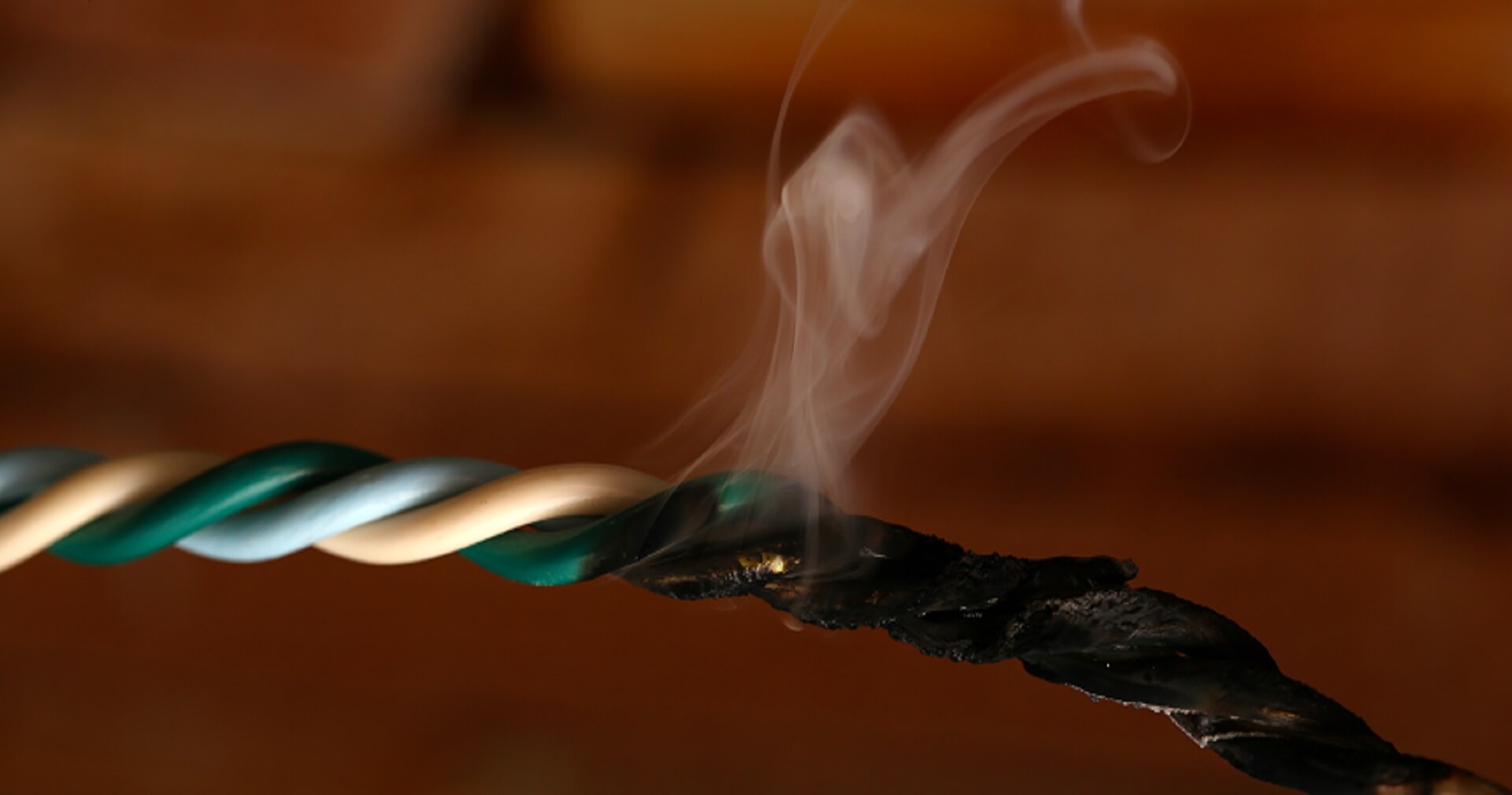
Product liability claims work differently from other injury claims in California, and the difference favours the injured person. In most injury cases the claimant has to prove someone was careless. In a strict liability product claim, that is generally not required — what matters is that the product was defective and that the defect caused harm.
This page explains the three defect theories, the two tests California applies to design defects and the burden shift built into one of them, who in the supply chain may be responsible, and why preserving the product itself matters more than anything else you do. Our California personal injury attorneys handle these claims from our San Mateo office. For a free consultation, call 650-250-0705.
What Makes a Product Defective in California?
California recognizes three theories: a manufacturing defect, where the item differs from the intended design; a design defect, where the design itself is unsafe; and a failure to warn, where the product carried inadequate warnings or instructions about a known or knowable risk. Design defect can be established two ways — the consumer expectation test or the risk-benefit test — and under the risk-benefit test the burden shifts to the defendant once the injured person proves the design was a substantial factor in causing harm. Most claims must be filed within two years.
Key Takeaways
- Strict liability means the focus is on the product, not on whether the manufacturer was careless.
- The consumer expectation and risk-benefit tests are alternative routes to proving a design defect — they are not defences to one another.
- Under the risk-benefit test, once three basic elements are proved, the defendant must prove the design’s benefits outweigh its risks.
- Anyone in the chain of distribution may be a defendant, not only the manufacturer.
- Preserving the product itself, unrepaired and unaltered, is often the single most important step after an injury.
Strict Liability and Why It Matters
California was the first state to adopt strict liability for defective products, and the doctrine remains more claimant-friendly here than in many jurisdictions. In an ordinary negligence claim, an injured person must show the defendant failed to use reasonable care. In a strict liability product claim, the question is whether the product was defective and whether the defect caused harm — not whether the company was careful.
That matters practically because a manufacturer’s internal quality processes may be entirely reasonable and a defective unit may still reach a consumer. Strict liability places that risk on the parties who put the product into the stream of commerce rather than on the person injured by it.
Negligence claims can be brought alongside strict liability ones, and the Judicial Council’s civil jury instructions include separate negligence theories covering a manufacturer’s duty to warn and its handling of recalls and retrofits.
The Three Defect Theories
| Theory | What it means | Typical evidence |
|---|---|---|
| Manufacturing defect | The specific item differed from the manufacturer’s own intended design or from other units in the same line | The product itself, comparison with specification, quality control and batch records |
| Design defect | The design itself is unsafe, so every unit made to that design carries the same risk | Engineering analysis, alternative designs, incident history across the product line |
| Failure to warn | The product lacked adequate warnings or instructions about a risk that was known or knowable | Labelling, manuals, internal risk assessments, complaint and adverse-event records |
These are not mutually exclusive. A single product can support more than one theory, and claims are often pleaded in the alternative because what the evidence ultimately supports is not always clear at the outset.
Design Defect: Two Tests, and a Burden That Shifts
This is where California law is genuinely distinctive, and it is worth understanding before speaking to any insurer.
The consumer expectation test
Under this test, a product’s design is defective if it did not perform as safely as an ordinary consumer would have expected when used in an intended or reasonably foreseeable manner. It asks the fact-finder to apply ordinary judgement rather than engineering analysis.
It does not apply to every product. A court decides as a threshold question whether the product is one about which an ordinary consumer can form reasonable minimum safety expectations. For everyday items the answer is usually yes; for complex machinery it often is not.
The risk-benefit test
Under the Judicial Council’s instruction for this test, the injured person must prove three things: that the defendant manufactured, distributed, or sold the product; that they were harmed; and that the product’s design was a substantial factor in causing that harm.
If those three are proved, the decision must be for the injured person unless the defendant proves that the benefits of the design outweigh its risks. The burden moves to the company. That is unusual, and it changes the shape of the case: the manufacturer must justify its design choices rather than the injured person having to prove them unjustifiable.
In weighing that balance, the factors considered include the gravity of the danger posed by the design, the likelihood that the danger would occur, the feasibility of a safer alternative design, the financial cost of an improved design, and the adverse consequences to the consumer of an alternative design.
They are alternatives, not competitors
The two tests provide alternative means of proving a design defect and do not operate as defences to one another. Which is available depends on the product and the facts, and both may go to a jury in the same case.
The full instructions are published by the Judicial Council in the California Civil Jury Instructions, with the products liability series beginning at CACI No. 1200.
Who May Be Responsible
Strict liability reaches the chain of distribution, not only the company whose name is on the box:
- The manufacturer of the finished product
- The manufacturer of a component part, subject to the component parts rule
- Distributors and wholesalers
- Retailers who sold the product
- In some circumstances, those who lease or rent equipment
This matters when a manufacturer is overseas, dissolved, or judgment-proof. A claim may still be viable against a distributor or retailer within the state. Identifying the full chain early affects both what insurance is available and who must preserve records.
What the Defence Will Raise
Misuse or modification. The jury instructions include an affirmative defence where the product was misused or altered after leaving the manufacturer’s hands in a way that was not reasonably foreseeable. Foreseeable misuse is a different matter — manufacturers are generally expected to anticipate that people will use products in predictable if incorrect ways.
Comparative fault. California applies comparative fault in strict liability cases, both as to the injured person and as to third parties. A finding of partial responsibility reduces a recovery rather than barring it.
Causation by something else. Where more than one product or condition could explain the injury, expect the defence to attribute it elsewhere.
Preserve the Product
This is the practical point that matters most, and it is frequently lost in the first week.
Do not discard, repair, return, or allow anyone to inspect and take away the product that caused the injury. Manufacturers and their insurers sometimes offer to collect an item for “testing” or to send a replacement. Once the item is gone, the manufacturing defect theory is usually gone with it, and the design and warning theories become considerably harder.
Alongside the product itself: keep the packaging, labels, manuals, and warnings; retain proof of purchase and any registration; photograph the item and the scene before anything is moved; and note the model and serial numbers. Where a recall exists, keep a record of it, but note that the absence of a recall does not mean the product was not defective.
Deadlines
| Situation | General rule | Source |
|---|---|---|
| Most injury claims against a private party | Two years from the date of injury | Code Civ. Proc., § 335.1 |
| Claims involving a public entity | A written claim generally must be presented to the entity before any lawsuit, on a much shorter timeline | California’s Government Claims Act |
Where an injury is caused by a product that is also part of a vehicle or a workplace system, more than one deadline and more than one body of law can apply at once. That is worth sorting out early rather than close to the two-year mark.
Damages
There is no preset value for a product liability claim, and no attorney can promise a figure. The categories California recognizes include past and future medical expenses, lost income and reduced future earning capacity, pain and suffering and loss of enjoyment of life, property damage, and loss of consortium in claims brought by a spouse.
Defective products can cause catastrophic harm, including traumatic brain injuries where a helmet, restraint, or safety system fails. Where a product-related injury is fatal, certain surviving family members may be able to bring a wrongful death claim, which follows its own rules about who may sue.
Product Claims in San Mateo and on the Peninsula
Our office at 15 North Ellsworth Avenue, Suite 105, San Mateo, CA 94401 works with injured people across the Peninsula. Product claims here arise alongside other injury matters — a vehicle or component failure in a car or truck collision, a helmet or safety system in a motorcycle or bicycle case, or equipment involved in a fall on unsafe premises.
Civil matters for this area are generally heard in the San Mateo County Superior Court. Details about the office are on our San Mateo page, and related explanations are collected in our California personal injury guides.
How Our California Defective Product Lawyers Can Help
Vaksman Khalfin, PC can take custody of and preserve the product before it is lost, identify everyone in the chain of distribution who may be responsible, obtain design documents, testing records, and complaint histories through discovery, work with engineering and safety experts to establish which defect theory the evidence supports, and handle the insurers. Where the risk-benefit test applies, we can put the manufacturer to its burden rather than accepting the framing that the design was reasonable. If a fair resolution is not offered, we are prepared to litigate.
The firm’s personal injury practice is led by Alan D. Khalfin and Robert B. Vaksman. We handle these cases on a contingency-fee basis: there is no upfront cost, and attorney’s fees are owed only if we recover compensation for you. To talk with a California defective product lawyer, call 650-250-0705 or schedule a free consultation.
This page provides general information about California law and is not legal advice; reading it does not create an attorney-client relationship. Every case is different, and prior results do not guarantee a similar outcome.
Reviewed by Alan D. Khalfin, Partner and Managing Attorney, Vaksman Khalfin, PC (admitted in California). Last reviewed: 08/13/2026