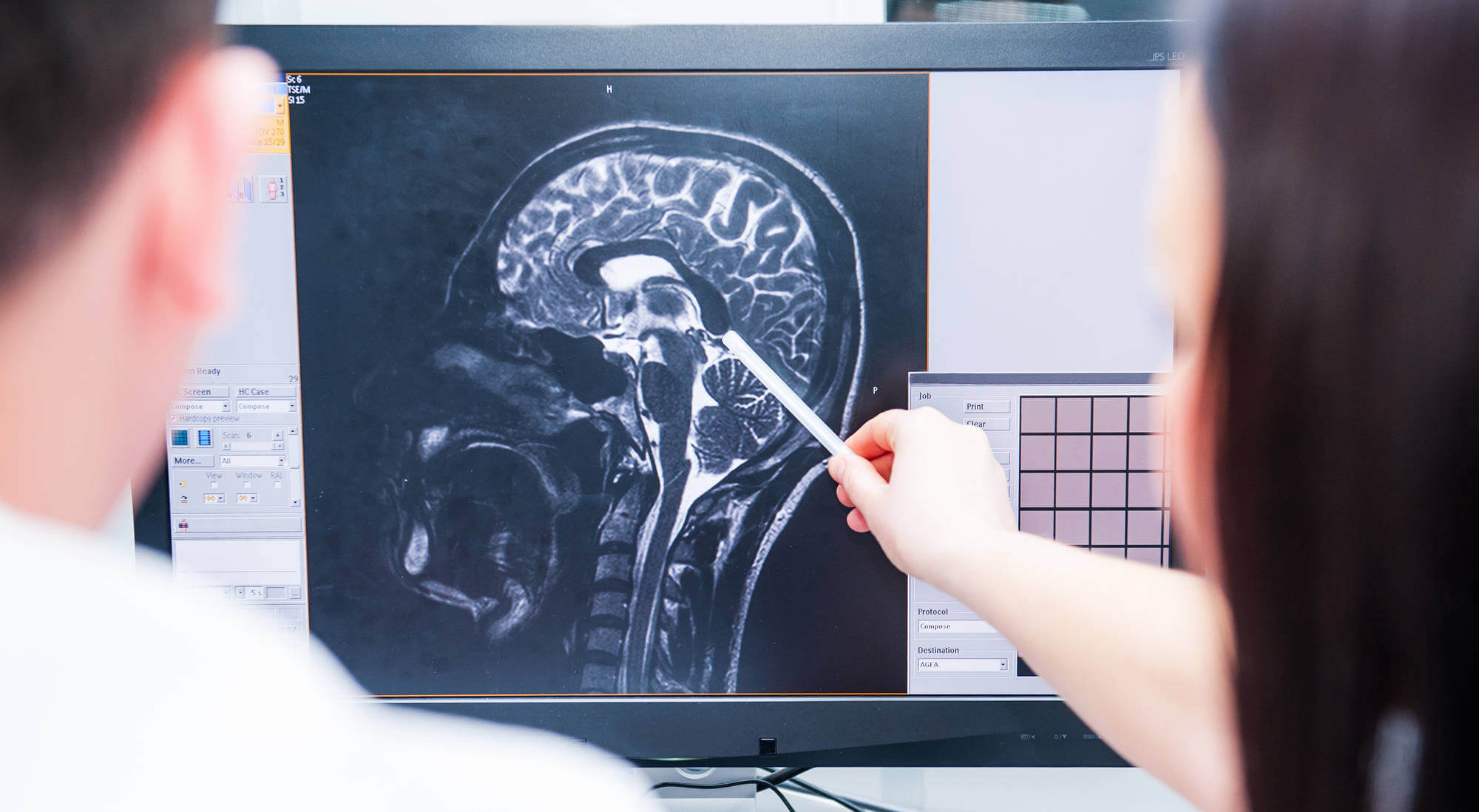
Brain injury claims are difficult in a way most injury claims are not. The harm is often real and life-altering while the medical imaging looks unremarkable, and the people who notice the change first are family and colleagues rather than doctors. That gap between what the records show and what the injured person is living through is where these cases are won or lost.
This page explains why brain injury claims are proven differently, what evidence establishes them, who is involved in building one, and what compensation California recognizes. Our California personal injury attorneys handle these claims from our San Mateo office. For a free consultation, call 650-250-0705.
Robert B. Vaksman, Esq.
Founding Partner
“Some cases are easier than others, but this doesn’t matter at Vaksman Khalfin, because we have the resources to help our clients no matter what is at stake, especially if it’s hard."
ALAN D. KHALFIN, ESQ.
Partner & Managing Attorney
"People call me when they need to plan, but also when something terrible has happened and they need help. It is personal to my clients, so it is personal to me. We have to help: no matter what."
More about brain injury in California
What Does a Brain Injury Lawyer Do?
A brain injury lawyer builds the evidentiary record that connects an incident to a specific set of cognitive, behavioural, or physical changes — because that connection is usually contested. That means securing early medical documentation, gathering accounts from people who knew the injured person before and after, working with neuropsychological and vocational experts, quantifying long-term care and lost earning capacity, and handling insurers who will argue the injury is minor or unrelated. Most California injury lawsuits must be filed within two years.
Key Takeaways
- Causation, not liability, is usually the contested issue in a brain injury claim.
- Normal imaging does not mean no injury, and insurers rely heavily on the opposite assumption.
- Testimony from family, friends, and colleagues about before-and-after change often carries more weight than any single record.
- Future care and lost earning capacity are frequently the largest components of these claims and require expert quantification.
- Most California injury lawsuits must be filed within two years, with a much shorter timeline where a public entity may be involved.
Why Brain Injury Claims Are Proven Differently
In a broken-bone case, an X-ray settles the question. Brain injuries do not work that way. Standard CT and MRI can appear normal after an injury that has meaningfully changed how someone thinks, sleeps, regulates emotion, or manages a full working day. The Centers for Disease Control and Prevention publishes general information on traumatic brain injury, including that effects can range from short-term to long-lasting.
That creates three recurring problems in a claim:
The record understates the injury. Emergency treatment focuses on ruling out bleeding and fractures. Cognitive symptoms often go unmentioned in the first records because nobody asks and the injured person does not yet know what has changed.
Symptoms emerge over time. Difficulty concentrating, irritability, sleep disruption, and word-finding problems can surface days or weeks later. An insurer will argue the delay proves the two events are unrelated.
The injured person is an unreliable narrator of their own injury. A brain injury can impair insight into the injury itself. People frequently report they are fine while those around them describe someone noticeably different.
None of that is medical advice — questions about diagnosis and treatment belong with qualified providers. It is a description of why the evidence in these cases has to be assembled rather than simply collected.
What Establishes a Brain Injury Claim
| Source of evidence | What it tends to show |
|---|---|
| Emergency and early treatment records | The mechanism of injury, initial findings, and any loss of consciousness or disorientation noted at the scene |
| Advanced imaging and specialist evaluation | Findings beyond what initial screening captured, where a treating provider considers it appropriate |
| Neuropsychological testing | Objective measurement of memory, processing speed, attention, and executive function against expected performance |
| Before-and-after testimony | Accounts from spouses, parents, friends, and colleagues describing specific changes they observed |
| Employment and academic records | Documented decline in performance, attendance, or capacity following the incident |
| Contemporaneous personal records | Messages, calendars, and notes showing when difficulties began and how they progressed |
The fourth row is the one people underestimate. A colleague describing that someone who used to run meetings now needs written instructions is concrete evidence, and it is often more persuasive to an adjuster or a jury than a test score. Those accounts are also perishable — memories blur, colleagues move on — which is a practical reason to gather them early.
Who Helps Build These Cases
Brain injury claims typically involve professionals beyond the treating physicians:
- Neuropsychologists, who administer and interpret standardized testing
- Treating specialists, who explain the clinical picture and prognosis in terms a jury can follow
- Vocational experts, who assess what work the person can realistically still do
- Life care planners, who project the treatment, therapy, equipment, and support a person is likely to need over a lifetime
- Economists, who reduce future care needs and lost earning capacity to present value
- Accident reconstruction experts, where the mechanism of injury is disputed
This is also why these cases take time. The full picture of a brain injury is rarely clear in the first months, and resolving a claim before it is clear tends to leave the future costs unaccounted for.
What You Can Expect

Free Consultation
At Vaksman Khalfin, PC we value transparency and offer a free initial consultation. We will assess the facts of your case, outline potential outcomes, and chart a probable course of action without any financial obligation on your part.

YOU ONLY PAY US IF WE REACH A SETTLEMENT OR WIN A VERDICT
Your satisfaction is our utmost priority. Our payment structure follows a, "No win, no fee," policy. Our policy guarantees our fees are contingent on a successful outcome for your case. If we do not obtain financial compensation on your behalf in the form of a judgment or settlement, then you are not financially obligated to pay for legal services.

EXCEPTIONAL ATTORNEYS AND CASE MANAGERS
A professional attorney with a case manager will be assigned to your case to ensure dedicated service and personalized attention. This loyal team is your consistent point of contact and they will handle all of your concerns personally. Whenever you have a question about your case you can reach out to Vaksman Khalfin, PC directly.

MEDICAL PROVIDERS WILL NOT RECEIVE PAYMENT UNTIL WE FINALIZE YOUR CASE
We believe in a complete and fair resolution of your case before medical providers get paid, so we have established relationships with many such providers. At Vaksman Khalfin, PC your medical needs are our top priority. We will always fight for your legal rights and strive to obtain the best medical and legal outcome possible.
How it works
We will fight for your rights.
Complimentary consultation
We provide you with a complimentary consultation related to your legal matter. If we are mutually interested in working together, you will sign an engagement agreement, after which we will get started on developing your case strategy. Remember, we don't get paid unless and until you get paid.
A Legal Team Working For You
Our legal team will work with you and your medical providers to ensure that you receive the best medical treatment possible. Afterward, we serve a pre-litigation demand letter and negotiate with the defendant. If the defendant does not offer a reasonable settlement amount, then we consider going to court.

We Will Protect Your Legal Rights
If pre-litigation efforts fail, in certain situations, we will continue fighting for you in court. This may take a while, but it will ensure that you get what you deserve. We have years of experience handling civil lawsuits in the state of California.
How These Injuries Happen
Brain injury claims arise across the range of personal injury matters, including car accidents, commercial truck collisions, motorcycle accidents, bicycle and pedestrian incidents, rideshare collisions, falls on dangerous property, and defective products such as helmets or restraint systems.
Injuries are commonly grouped as traumatic — caused by an external force such as an impact or a fall — or acquired, resulting from an internal event such as oxygen deprivation. The distinction matters legally because it shapes which parties and which theories may be involved. Our page on how a brain injury lawsuit works covers that in more detail, along with the claim process itself.
Deadlines
Most California personal injury lawsuits must be filed within two years of the injury under Code of Civil Procedure section 335.1. Where a public entity may share responsibility, a written claim generally must be presented to that entity first, under California’s Government Claims Act and on a much shorter timeline. Claims arising from a health care provider’s professional negligence follow a different period under section 340.5.
Because a brain injury’s full extent may not be apparent for months, families sometimes assume there is no rush. The filing deadline runs regardless, and the evidence that matters most — early records, witness recollection — degrades well before it expires.
What California Recognizes as Compensation
There is no preset value for a brain injury claim, and no attorney can responsibly quote one. What a claim is worth depends on the evidence: the nature and permanence of the injury, the documented care, the effect on work and daily life, the degree of fault attributed to each party, and the insurance actually available.
The categories California recognizes include:
- Past and future medical expenses, including rehabilitation, therapies, and ongoing treatment
- Costs of attendant care, assistive equipment, home modification, and supported living where needed
- Lost income and reduced future earning capacity
- Pain, suffering, and loss of enjoyment of life
- Loss of consortium, in claims brought by a spouse
Future care is frequently the largest element and the one most often understated in an early settlement offer, because it requires expert projection rather than a stack of existing bills. Where a brain injury proves fatal, certain surviving family members may be able to bring a wrongful death claim, which follows its own rules about who may sue.
California also follows a pure comparative fault approach, so a finding that the injured person bore some share of responsibility reduces a recovery rather than barring it.
Brain Injury Claims in San Mateo and on the Peninsula
Our office at 15 North Ellsworth Avenue, Suite 105, San Mateo, CA 94401 works with injured people and their families across the Peninsula. Civil matters for this area are generally heard in the San Mateo County Superior Court, and where a city, the county, a transit agency, or a state agency may share responsibility for a roadway or facility, the Government Claims Act timeline applies.
One practical local point: cognitive demands vary enormously by occupation, and the Peninsula’s employment mix means a change that would be manageable in one job can end a career in another. Establishing what someone could do before, in their actual role, is part of establishing what has been lost.
Details about the office are on our San Mateo page, and related explanations are collected in our California personal injury guides.
How Our California Brain Injury Lawyers Can Help
Vaksman Khalfin, PC can move early to preserve evidence and gather witness accounts while recollection is fresh, identify every party who may be responsible and every policy that may apply, work with treating providers and appropriate experts to document the injury and its effects, quantify long-term care needs and lost earning capacity rather than accepting an offer based on bills to date, and handle the insurers directly. If a fair resolution is not offered, we are prepared to litigate.
The firm’s personal injury practice is led by Alan D. Khalfin and Robert B. Vaksman. We handle brain injury cases on a contingency-fee basis: there is no upfront cost, and attorney’s fees are owed only if we recover compensation for you. To talk with a California brain injury lawyer, call 650-250-0705 or schedule a free consultation.
This page provides general information about California law and is not legal advice, and nothing here is medical advice; reading it does not create an attorney-client relationship. Every case is different, and prior results do not guarantee a similar outcome.
Reviewed by Alan D. Khalfin, Partner and Managing Attorney, Vaksman Khalfin, PC (admitted in California). Last reviewed: 08/13/2026
What Our Clients Say



"As always, outstanding service, with great professionalism, attentiveness and personal touch."

"Very professional. They quickly answered all our questions. Thanks!"

Brain Injury Claim Frequently Asked Questions Frequently Asked Questions
A brain injury lawyer builds the evidence connecting an incident to specific cognitive, behavioural, or physical changes, since that connection is usually what a defendant disputes. That involves securing early medical documentation, gathering before-and-after accounts from people who know the injured person, working with neuropsychological and vocational experts, quantifying long-term care and lost earning capacity, and dealing with the insurers.
Possibly. Standard imaging can appear unremarkable after an injury that has meaningfully affected someone's functioning, and a normal scan does not by itself resolve whether an injury occurred. These claims are typically established through a combination of clinical evaluation, neuropsychological testing, and accounts from people who observed the change.
Delayed or worsening symptoms are common with brain injuries and do not automatically defeat a claim. A gap does invite an argument from the insurer that the injury is unrelated, which is why medical records and accounts from family or colleagues who noticed changes can matter a great deal.
There is no preset amount, and no lawyer can responsibly quote a figure. Value depends on the evidence: the nature and permanence of the injury, the documented care, the effect on work and daily life, the fault attributed to each party, and the insurance available. An attorney can explain which categories of loss apply and how they are established.
Because the full extent of the injury is often not clear for months, and future care needs cannot be projected until it is. Resolving a claim early tends to leave those future costs unaccounted for, which is why the timing of settlement discussions matters in these cases more than in most.
People who knew you before and after — spouses, parents, adult children, close friends, supervisors, and colleagues. Specific, concrete observations carry more weight than general statements, and these accounts are often central rather than supplementary.
Most personal injury lawsuits must be filed within two years of the injury under Code of Civil Procedure section 335.1. If a public entity may share responsibility, a written claim generally must be presented to that entity first, on a much shorter timeline. Claims involving a health care provider's professional negligence follow a different period under section 340.5.
An early offer resolves the claim in full, including future treatment and lost earning capacity that may not yet be quantified. With a brain injury, those elements are frequently the largest part of the claim and the least visible early on. It is reasonable to understand the full picture before deciding, and a lawyer can review an offer at no cost.
Vaksman Khalfin, PC handles brain injury cases on a contingency-fee basis: there is no upfront cost, and attorney's fees are owed only if we recover compensation for you. Initial consultations are free.