

Robert B. Vaksman, Esq.
Founding Partner
“Some cases are easier than others, but this doesn’t matter at Vaksman Khalfin, because we have the resources to help our clients no matter what is at stake, especially if it’s hard."
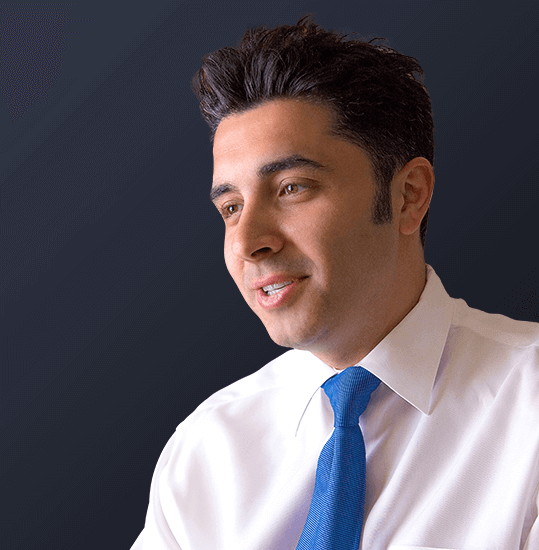
Alan D. Khalfin, Esq.
Partner & Managing Attorney
"People call me when they need to plan, but also when something terrible has happened and they need help. It is personal to my clients, so it is personal to me. We have to help: no matter what."

Learn more about Estate Planning in California
- A/B Trust
- Choosing a Legal Guardian for Minor Children
- Deeds Upon Death
- Estate Planning With Minor Children
- Estate Planning for Same-Sex Families
- Estate Planning for Single Parents
- How Do Taxes Work In a Living Trust?
- How Does a Mortgage Work With a Living Trust?
- How to Move Property In and Out of a Trust
- Life Insurance Trust
- Living Trust vs Will In California
- Property Title
- Qualified Domestic Trust
- Revocable Living Trust
- Separate Property Trusts
- Trustees vs. Financial Agents
- What is Staged Distribution in Estate Planning?
- What is an Estate Plan?
- What would your child want if you passed away? 6 factors from a kid’s perspective
- When Should You Create an Estate Plan?
- Who Needs a Living Trust? Pros & Cons of A Living Trust
What a Deed Upon Death Is
California’s revocable transfer on death deed took effect in 2016 and is governed by Probate Code section 5600 and the sections that follow. “Revocable” is the operative word: the owner can change or cancel it at any time while alive.
The named beneficiary gets nothing during the owner’s lifetime — no ownership interest, no right to use the property, no say in whether it is sold or refinanced. The owner can sell the home, take out a loan against it, or record a new deed naming someone else entirely, without the beneficiary’s consent or knowledge. Only at the owner’s death does the beneficiary’s interest arise, and the beneficiary then has steps to complete, including establishing the death of record and giving notice to the owner’s heirs.
What Property Qualifies
The statute does not cover everything a person owns. Under Probate Code section 5610, as amended effective January 1, 2024, “real property” for this purpose means:
| Qualifies | Does not qualify |
|---|---|
| A parcel of land improved with one to four residential dwelling units | A parcel of agricultural land larger than 40 acres |
| A residential separate interest and its appurtenant common area in a common interest development, regardless of how many units the development contains | Property that falls outside the statutory definition, including many commercial and industrial parcels |
Two practical points follow. A deed upon death reaches one category of asset, so it does not address bank accounts, investments, business interests, or personal property. And it transfers only the owner’s own interest — where a home is co-owned, a co-owner who also wants to name a beneficiary generally needs to sign and record a separate deed.
What Makes a Deed Upon Death Valid
California sets specific formalities, and a deed that misses one may simply not work. Under Probate Code section 5624, a revocable transfer on death deed is not effective unless all of the following are satisfied:
- The deed is signed by the transferor and dated.
- The deed is signed by two witnesses who were present at the same time, and who witnessed either the signing or the transferor’s acknowledgment that they had signed.
- The deed is acknowledged before a notary public.
Then, under Probate Code section 5626, the deed is not effective unless it is recorded on or before 60 days after the date it was acknowledged before a notary. A deed that is signed, witnessed, and notarized correctly but recorded on day 70 does not take effect.
The witness requirement is comparatively recent — it was added effective January 1, 2022 — and it is a common point of failure for people working from older forms or templates found online. California also addresses who should serve as a witness: under Probate Code section 5625, an interested witness does not invalidate the deed, but where a beneficiary is also a subscribing witness, a presumption arises that the witness procured the deed by duress, menace, fraud, or undue influence. In practice that is a strong reason to use witnesses who are not receiving the property.
An Expiration Date on the Law Itself
Section 5600 states that this part of the Probate Code remains in effect only until January 1, 2032, and is repealed as of that date unless the Legislature deletes or extends it. The statute also provides that repeal would not affect the validity or effect of a deed executed before that date, or the ability to revoke a deed using the statutory form.
The Legislature has extended this deadline before and amended the statute several times since 2016, so the rules can change. That is a reason to confirm the current law before relying on a deed upon death, and to revisit an existing one periodically rather than filing it away.
What you can expect
from Vaksman Khalfin Estate Planning Attorneys

Free Consultation
Our goal is for each client to have an opportunity to secure their estate. That is why your Vaksman Khalfin journey begins with a no-obligation free confidential consultation. This free session provides an opportunity to understand your unique needs, discuss your concerns, and establish how we can assist you towards achieving your estate planning goals.

Flexible Pricing
We understand that everyone's financial situation is different. Moreover, everyone may have different estate planning needs. With this in mind, we offer flexible pricing structures to ensure our quality legal services are accessible to all. Our goal is to provide exceptional value, at a cost that makes sense for your personal circumstances.

Safe Access to Your Documents
Your estate planning documents are important and should be readily accessible when you need them. To ensure the security of these documents, we provide safe and easy access to your files at any time.
Personal Support
A dedicated attorney and case manager will be assigned to your case to ensure a personal and concerted approach to your legal matter. This focused support provides a direct point of contact, personalized attention to your case, and ensures the swift resolution of any concerns or issues that may arise.
Our Difference
“Simply stated, we have a process.”

Using our combined expertise, we will analyze your matter to design a strategy by using the broadest array of legal resources available, while continuously being mindful of costs.
We will provide original, innovative solutions, drawing upon our deep knowledge of advanced strategies in order to present a comprehensive plan for your needs, in a systematic, practical and client-friendly manner.
While designing a strategy calls on creative skills, plan implementation relies entirely on strong management. Each client is represented by a team of at least 2 attorneys and 2 staff members. Although it may seem like cost-savings for a client to work with an attorney 1-1; not only does it not cut costs, but it often results in critical errors or omissions in the representation. Through proper management and team-work, we aim to deliver exceptional and efficient legal services, while exceeding our clients’ expectations.
We are interested in creating lasting relationships with our clients, and our forward-thinking approach allows our team to fully understand your unique needs on an ongoing basis. Inquire about our Membership Plan for more information.
How it works
We will fight for your rights.
Complimentary consultation
Complimentary phone or Zoom meeting with our law firm to answer any questions and discuss our process.

Working with a Legal team
Work with us through an easy and secure process to design your custom plan.

Confirm and sign your documents
We draft your plan for your review. Once confirmed, we’ll provide you a binder with final documents for you to sign.
What a Deed Upon Death Does Not Do
This is the part most worth understanding before choosing this option:
- It covers one property, not an estate. Everything else you own still needs a plan.
- It does not clear what is owed on the property. A mortgage, lien, or other encumbrance stays with the property and follows it to the beneficiary.
- It does not manage anything. If you become unable to handle your affairs during life, a deed upon death does nothing; that is what powers of attorney and living trusts address.
- It offers no flexibility about timing or conditions. A beneficiary receives the property outright. There is no mechanism to hold it for a young adult, protect it from a beneficiary’s creditors or divorce, or stage a distribution over time.
- Naming several beneficiaries can create complications. Multiple beneficiaries take as co-owners, which can leave people who disagree about selling holding a house together.
- It can go stale. A beneficiary who dies before the owner, a marriage, a divorce, or a new child can leave a deed that no longer reflects what the owner wanted.
- There may be tax and benefits consequences. Property tax reassessment rules and public-benefits recovery rules can apply. These depend heavily on individual circumstances and are worth reviewing with a professional before acting.
Deed Upon Death vs. Will vs. Living Trust
| Deed upon death | Will | Revocable living trust | |
|---|---|---|---|
| What it covers | One qualifying real property interest | Property passing through the estate | Assets transferred into the trust |
| Court involvement at death | Designed to pass the property outside probate | Generally administered through probate | Generally administered by the trustee outside probate |
| Control during life | Owner keeps full control; revocable | Owner keeps full control; revocable | Owner typically serves as trustee; revocable |
| Planning for incapacity | No | No | Yes, through successor trustee provisions |
| Ability to stage or condition distributions | No | Limited, through a testamentary trust | Yes |
| Handles assets beyond real estate | No | Yes | Yes |
These tools are not mutually exclusive, and many plans use more than one. Our pages on revocable living trusts, California probate, and California deeds go further into how each works.
Does a Deed Upon Death Override a Will?
A properly executed and recorded deed upon death operates outside the will, so the property it covers generally is not controlled by what a will says about that property. The statute also addresses what happens when a transfer on death deed and another instrument both purport to dispose of the same property, with the outcome turning on what was recorded and when.
Because conflicting documents create exactly the kind of dispute that ends up in court, a deed upon death is best treated as one component of a coordinated plan rather than a document signed in isolation.
Changing or Revoking a Deed Upon Death
An owner can revoke a deed upon death at any time while alive. California provides a statutory revocation form, and the revocation is subject to its own signing, notarization, and recording requirements. Recording a later transfer on death deed for the same property is another route, and selling the property during life leaves nothing for the deed to transfer.
What does not work is crossing it out, tearing it up, or writing a new will. Because the deed is a recorded instrument, undoing it generally requires recording something.
Deeds Upon Death for San Mateo and Peninsula Homeowners
Our office at 15 North Ellsworth Avenue, Suite 105, San Mateo, CA 94401 works with families across the Peninsula, where a home is often the most valuable thing a family owns and the piece people most want handled cleanly. A deed upon death is recorded with the county recorder for the county where the property sits, and for San Mateo County property that is the San Mateo County recorder.
Whether this tool fits depends on details: how the property is titled, whether it is co-owned, what else is in the estate, who the intended recipients are, and what the family wants to happen if a beneficiary dies first or cannot agree with the others. That is what a planning conversation is for.
More about the office is on our San Mateo page, and related explanations are collected in our California trust and estate guides.
How We Help
At Vaksman Khalfin, PC, our estate planning attorneys review what you own and how it is titled, explain how a deed upon death compares with a broader estate plan, walk through the current statutory requirements, and help you decide on an approach that fits your family and your property. Where a deed upon death is the right tool, we prepare and coordinate it properly. Where it is not, we say so.
The firm’s trusts and estates practice is led by Alan D. Khalfin and Robert B. Vaksman. To talk with a California estate planning attorney, call 650-250-0705 or schedule a free consultation.
This page provides general information about California law and is not legal advice; reading it does not create an attorney-client relationship. Every situation is different, and prior results do not guarantee a similar outcome.
Reviewed by Alan D. Khalfin, Partner and Managing Attorney, Vaksman Khalfin, PC (admitted in California). Last reviewed: 08/14/2026
WHAT OUR CLIENTS SAY



"I was referred to Vaksman Khalfin for Estate Planning. After working together for a year (the delays were all mine), I can vouch that their team is fantastic to work with. They’re cost-effective, efficient, knowledgeable and always willing to answer questions, explore options and explain legal concepts."

"My wife and I had a very good experience working remotely with Vaksman Khalfin on our Living Trust, Will, Healthcare Directives, etc. done with a fixed fee package. The process was streamlined end-to-end. All of our questions were answered promptly by phone or email. I highly recommend this law firm!"

"Vaksman Khalfin deserves great reviews. They helped my family during a very difficult time and they did so with compassion and dedication. No matter how many questions I posed (sometimes the same one several times), I received quick and clear responses. Our documents were delivered on time and thoroughly explained."

Deed Upon Death Frequently Asked Questions Frequently Asked Questions
It is a revocable transfer on death deed: a recorded document naming a beneficiary to receive certain California residential real property when the owner dies. The owner keeps full ownership and control during life and can revoke the deed at any time. It is governed by Probate Code section 5600 and the sections that follow.
It is designed to let the qualifying property pass to the named beneficiary outside of probate. Whether it works that way in a particular case depends on the deed meeting every statutory requirement, on how the property is titled, and on the circumstances at death. It also covers only that property, so the rest of an estate still needs a plan.
It covers only one qualifying property rather than an estate, does not clear a mortgage or other liens, does nothing to address incapacity during life, and gives the beneficiary the property outright with no ability to stage or condition the distribution. Naming multiple beneficiaries can leave co-owners who disagree about selling, and the deed can become outdated after a death, marriage, divorce, or birth.
Under Probate Code section 5626, the deed is not effective unless it is recorded on or before 60 days after the date it was acknowledged before a notary. Missing that window means the deed does not take effect, even if everything else was done correctly.
Yes. Since January 1, 2022, Probate Code section 5624 requires the deed to be signed by two witnesses who were present at the same time, in addition to being signed and dated by the owner and acknowledged before a notary. Older forms circulating online may not reflect this.
Under Probate Code section 5610, a parcel improved with one to four residential dwelling units, or a residential separate interest and its appurtenant common area in a common interest development regardless of how many units the development contains. Agricultural land larger than 40 acres is excluded.
Yes, at any time while you are alive. California provides a statutory revocation form, which has its own signing, notarization, and recording requirements. Recording a later transfer on death deed for the same property, or selling the property, are other routes. Simply destroying your copy does not revoke a recorded deed.
A properly executed and recorded deed upon death operates outside the will, so the property it covers generally is not controlled by what the will says about that property. The statute addresses conflicts between a transfer on death deed and another instrument, with the outcome depending on what was recorded and when.
Neither is better in the abstract; they do different things. A deed upon death addresses one property and nothing else. A living trust can cover many kinds of assets, address incapacity during life, and allow distributions to be staged or conditioned. Which approach fits depends on what you own, your family situation, and your goals. A lawyer can explain the trade-offs for your circumstances.
Probate Code section 5600 currently provides that this part of the code remains in effect only until January 1, 2032 and is repealed as of that date unless the Legislature deletes or extends it. The statute provides that repeal would not affect the validity of a deed executed before that date. Because the Legislature has extended and amended this law before, it is worth confirming the current rules before relying on it.
The statutory requirements are specific and easy to get wrong, and a deed upon death interacts with how your property is titled, what else you own, and the rest of your plan. A lawyer can walk through whether it fits your situation and how it would work alongside your other documents.