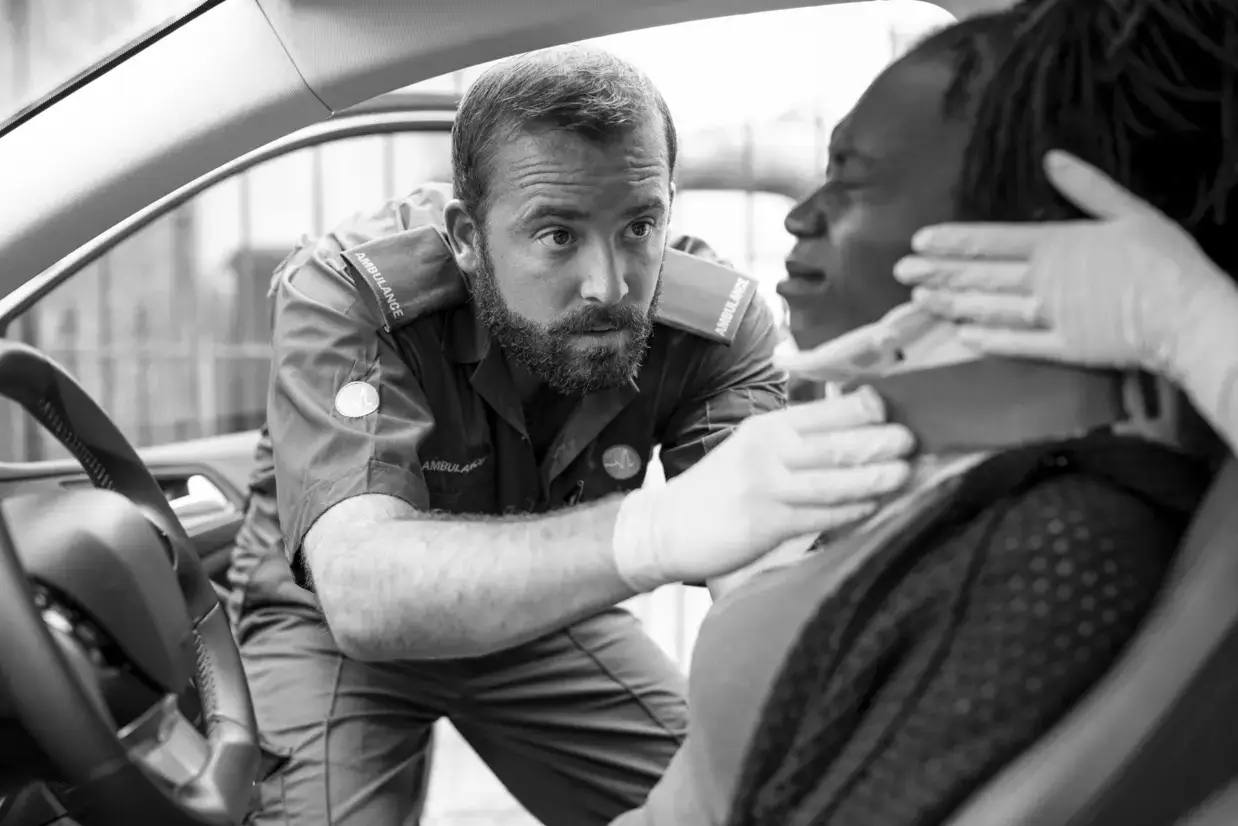
There is no reliable average settlement for a car accident back or neck injury. Published averages pool cases that have almost nothing in common — a resolved muscle strain and a spinal cord injury sit in the same dataset — and they ignore the three things that actually govern a California claim: what the medical record documents, how fault is apportioned between the drivers, and how much insurance is available to pay. In a significant share of claims, the practical ceiling is set by the at-fault driver’s policy limits rather than by the injury itself.
This page explains how back and neck injury claims are valued in California, which parts of the process are set by law and which are set by evidence, and the arguments insurers most often raise against this particular category of injury. It is a companion to our main California car accident page, which covers deadlines, minimum coverage, and liability in more general terms.
Key Takeaways
- No published average can tell you what a specific back or neck claim may be worth, because averages describe unrelated cases rather than your evidence.
- California limits recovery of past medical expenses to the lesser of the amount actually paid or incurred and the reasonable value of the services — not the amount originally billed.
- California uses pure comparative fault, so a share of responsibility reduces a recovery rather than eliminating it.
- Since January 1, 2025, California’s minimum liability limits are $30,000 per person, $60,000 per accident, and $15,000 for property damage. Where the at-fault driver carries only the minimum, that policy may be the effective limit on what is recoverable from them.
- Back and neck claims draw a distinctive set of insurer arguments — degenerative findings on imaging, gaps in treatment, and low visible vehicle damage.
- Most California injury lawsuits must be filed within two years of the injury, and a much shorter timeline can apply where a public entity may be involved.
Why an Average Figure Will Not Tell You What a Claim Is Worth
Averages circulate widely for this injury category, and they are close to meaningless for an individual claim, for three reasons.
The cases in the dataset are not comparable
“Back and neck injury” covers everything from a strain that resolves in weeks to a fracture or cord injury with permanent consequences. Any figure that averages those together is describing a population, not a claim. Two people with the same diagnosis can also end up in very different positions depending on the treatment they needed, the work they could not do, and what their records show.
Averages describe outcomes, not evidence
A settlement figure is the end of a process. What produced it was the documentation, the liability picture, and the negotiation. Reading the number backwards to predict a different claim skips everything that generated it.
The available insurance often sets the ceiling
Injury value and recoverable value are separate questions. Where the at-fault driver carries minimum coverage and has no meaningful personal assets, the amount actually collectible from that driver may be capped by the policy, regardless of how serious the harm was. This is why the coverage on your own policy — uninsured, underinsured, and medical payments — is frequently the more important question, and one of the first things worth checking.
What Determines the Value of a Back or Neck Injury Claim in California
Rather than a formula, the assessment turns on a set of factual questions:
- What the diagnosis is, and what supports it. Objective findings, imaging, and specialist evaluations carry different weight than reported symptoms alone.
- What the treatment course was. Whether care was conservative, injection-based, or surgical affects both documented cost and the picture of severity.
- Whether causation is clear. Back and neck complaints are common in the general population, so the link between the collision and the condition is contested more often here than in most injury categories.
- What the injury has cost, and will cost. Past and future care, lost income, and reduced earning capacity are documented differently and are proven with different evidence.
- How the injury affects daily life. Non-economic harm is real but is established through evidence rather than assertion.
- How fault is apportioned. Any share of responsibility assigned to the injured person reduces the recovery proportionally.
- What insurance actually applies. The at-fault driver’s limits, any additional policies, and your own coverage.
How California Law Shapes What Can Be Recovered
Medical expenses are limited to what was paid or incurred
Under Howell v. Hamilton Meats & Provisions, Inc. (2011) 52 Cal.4th 541, an injured person’s recovery for past medical expenses cannot exceed the lesser of the amount accepted by the provider as payment in full and the reasonable value of the services. The face amount of a bill is not automatically the measure of damages. For back and neck injuries, where billed charges and negotiated rates can diverge substantially, this matters a great deal to how a claim is evaluated.
The categories of damages California recognizes
California recognizes economic and non-economic damages. Depending on the evidence, the categories that may be available include:
- Past medical treatment
- Future medical care, including further treatment or surgery
- Lost income
- Reduced future earning capacity
- Property damage and related costs
- Pain, suffering, and loss of enjoyment of life
- Loss of consortium, in a claim brought by a spouse
Which categories apply, and what evidence would be needed to establish them, is something a lawyer can review against the specific circumstances.
Is there a formula for pain and suffering?
No. California law does not prescribe a multiplier or any other formula for non-economic damages. Some adjusters and evaluation software apply internal rules of thumb, and those conventions are sometimes described online as though they were legal rules. They are not. An insurer’s internal method is a negotiating position, not a measure of what a claim is worth.
Shared fault reduces a recovery rather than barring it
California follows pure comparative fault. Someone found partly responsible for a collision can still recover, with the recovery reduced by their share of responsibility. Because reducing that share is one of the most effective defense strategies available, how fault is investigated and documented early can affect the outcome considerably.
Punitive damages are not something an adjuster awards
Punitive damages are decided by a court or jury, not by an insurance company. Under California Civil Code section 3294, they require proof by clear and convincing evidence that the defendant acted with oppression, fraud, or malice — a materially higher standard than the one that applies to the rest of a negligence claim. California law also limits an insurer’s liability for a loss caused by the willful act of its insured. In ordinary negligence cases, including most back and neck injury claims, punitive damages are not part of the picture.
The filing deadline
Most California personal injury lawsuits must be filed within two years of the injury under Code of Civil Procedure section 335.1. Where a city, county, transit agency, or other public entity may share responsibility, California’s Government Claims Act requires a written claim to be presented first, on a timeline far shorter than two years. Uninsured and underinsured motorist claims run against your own insurer under your policy, which can impose its own notice requirements. The car accident page sets out how these deadlines interact.
Why Insurers Treat Back and Neck Claims Differently
This injury category attracts a recognizable set of defenses. Understanding them in advance is more useful than knowing what someone else’s case settled for.
| Item | Amount | Timing |
| Articles of Organization, LLC (Form LLC-1) | $70 | At formation, filed online through bizfile |
| Articles of Incorporation, stock corporation | $100 | At formation |
| Statement of Information (Form LLC-12 for LLCs) | $20 | Within 90 days of registering, and periodically thereafter |
| Annual minimum franchise tax | $800 | Annually, for LLCs and corporations doing business in California |
| LLC fee based on total California income | Varies by income tier | Applies once California income exceeds the statutory threshold |
A pre-existing condition does not automatically defeat a claim. California law generally allows recovery for the aggravation of a pre-existing condition, though separating what the collision caused from what was already present is frequently the central dispute, and it is resolved with medical evidence.

What Builds a Documented Back or Neck Claim
- Prompt evaluation, and follow-through on the treatment that is recommended
- Consistent symptom reporting across providers, so the record does not appear to contradict itself
- Specific rather than general descriptions of functional limits — what can no longer be done, and for how long
- Employment records supporting missed work or changed duties
- Care with recorded statements and broad medical authorizations requested early by the other driver’s insurer
None of this suggests an insurer is acting improperly. The interests simply are not aligned, and the record created in the first weeks tends to carry more weight than anything assembled later.
If a Settlement Offer Seems Low
An early offer resolves the claim in full, including future care and lost income that may not yet be quantified. A first offer can be declined, and a claim can be reopened for negotiation. Before responding, it is worth understanding what the offer is being measured against: the documented treatment to date, the projected future care, the fault apportionment the insurer is applying, and the coverage actually available. A lawyer can review an offer against those inputs and explain what a further evaluation would involve.

Back and Neck Injuries After a Peninsula Collision
Our office at 15 North Ellsworth Avenue, Suite 105, San Mateo, CA 94401 handles injury claims across San Mateo County and the Peninsula, and civil matters for this area are generally heard in the San Mateo County Superior Court. Back and neck injuries commonly arise from collisions involving motorcycles, bicycles, pedestrians, rideshare vehicles, and commercial trucks, each of which raises its own questions about who may be responsible and which policies may apply. Where a collision produces a head injury alongside spinal symptoms, our brain injury page covers that overlap.
How Vaksman Khalfin Can Help
We can review the medical record and identify what still needs documenting, evaluate how fault is likely to be apportioned, locate every policy that may apply — including uninsured and underinsured coverage on your own policy — and handle communications with the insurers so that you are not negotiating while recovering. Where a reasonable resolution is not offered, we are prepared to litigate.
The firm’s personal injury practice is led by Alan D. Khalfin, admitted in California. We handle these matters on a contingency-fee basis: there is no upfront attorney’s fee, and attorney’s fees are owed only if we recover compensation for you. Case costs are a separate category from attorney’s fees, and how they are handled is set out in the written fee agreement we review with you before anything is signed. Initial consultations are free.
To talk with a California car accident attorney about a back or neck injury, call 650-250-0705 or schedule a free consultation. Further explanations are collected in our California personal injury guides, and immediate steps after a collision are covered in what to do after a car accident.
Reviewed by Alan D. Khalfin, Partner and Managing Attorney, Vaksman Khalfin, PC (admitted in California). Last reviewed: 09/09/2026
Frequently Asked Questions
There is no reliable average. Published figures combine cases with different injuries, different treatment, different fault apportionment, and different insurance limits, so they cannot indicate what any specific claim may be worth. What a claim is worth depends on the documented injury, the effect on work and daily life, the share of fault assigned, and the coverage available to pay.
Through evidence rather than a formula. The main inputs are the diagnosis and what supports it, the treatment provided and reasonably anticipated, documented income loss, the effect on daily life, the apportionment of fault, and the insurance available. California limits past medical damages to the lesser of the amount paid or incurred and the reasonable value of the services.
Not automatically. California law generally permits recovery for the aggravation of a pre-existing condition. Degenerative findings on imaging are common in adults and are frequently raised by insurers, which is why records showing the change in symptoms and function after the collision matter.
Some adjusters and claims software apply internal conventions, but California law does not prescribe a multiplier or any other formula for non-economic damages. An insurer's internal method is a negotiating position rather than a legal standard.
Yes. California uses pure comparative fault, so being partly responsible reduces a recovery by that share rather than barring the claim.
Uninsured motorist coverage may apply where the other driver has none, and underinsured motorist coverage may apply where they have insurance but not enough to cover the harm. Insurers must offer uninsured motorist coverage in California, and declining it requires a written rejection, so it is worth checking your own declarations page.
Most California personal injury lawsuits must be filed within two years of the injury under Code of Civil Procedure section 335.1. Where a public entity may share responsibility, a written claim generally must be presented first on a much shorter timeline, and uninsured or underinsured motorist claims are governed by your own policy.
Vaksman Khalfin, PC handles these cases on a contingency-fee basis. There is no upfront attorney's fee, and attorney's fees are owed only if we recover compensation for you. Case costs are treated separately from attorney's fees, and the written fee agreement sets out how both are handled. Initial consultations are free.
What are My Next Steps?

Free Consultation
Consult with a doctor or get a medical examination, first.

Free Consultation
After your diagnosis, it's time to address suitable compensation for your injuries. You can hire a lawyer at any stage, but it's usually beneficial as early as possible.

Free Consultation
It's natural to feel anxious and overwhelmed about what lies ahead. An attorney can simplify the process by guiding you through each step.

Free Consultation
At Vaksman Khalfin, we’re here to help you with any car injury, so contact us now for a professional, no-obligation, free consultation.
How it works
We will fight for your rights.

Complimentary consultation
We provide a complimentary consultation regarding your matter. If we're a mutual fit, you'll sign an engagement agreement before we get started. Remember, we don't get paid unless and until you do.
Working with a Legal team
Our legal team will work with you and your medical provider to ensure you're effectively treated. After, we serve a pre-litigation demand and negotiate with the defendant. If we don't get what we believe you deserve, we consider going to court.
We will fight for you
If pre-litigation efforts fail, we'll continue fighting for you in court. Going to trial may take a while, but it ensures you get what you deserve.
What Our Clients Say



“I found Alan and Vaksman Law Offices on Yelp. After a year+ of working with them on my Estate Planning (the delays were all mine), I can vouch that Alan and his team are fantastic to work with. They’re efficient and on top of their game. Alan is very knowledgeable and always willing to answer questions, explore options, and explain legal concepts to me.”

“This firm deserves great reviews. Vaksman handled my trust package as advertised and delivered it as promised. Could not have been smoother. And the price was very attractive compared with quotes we received from several other trust lawyers. We spoke with Alan during the initial setup and he was exceptionally clear and helpful. A superb experience with no confusing legal-speak.”


$ 10 MM+
Recovered for Clients
1000 +
Injured Clients

5000 +
Trusts & Wills

3.5 ×
Higher compensation*