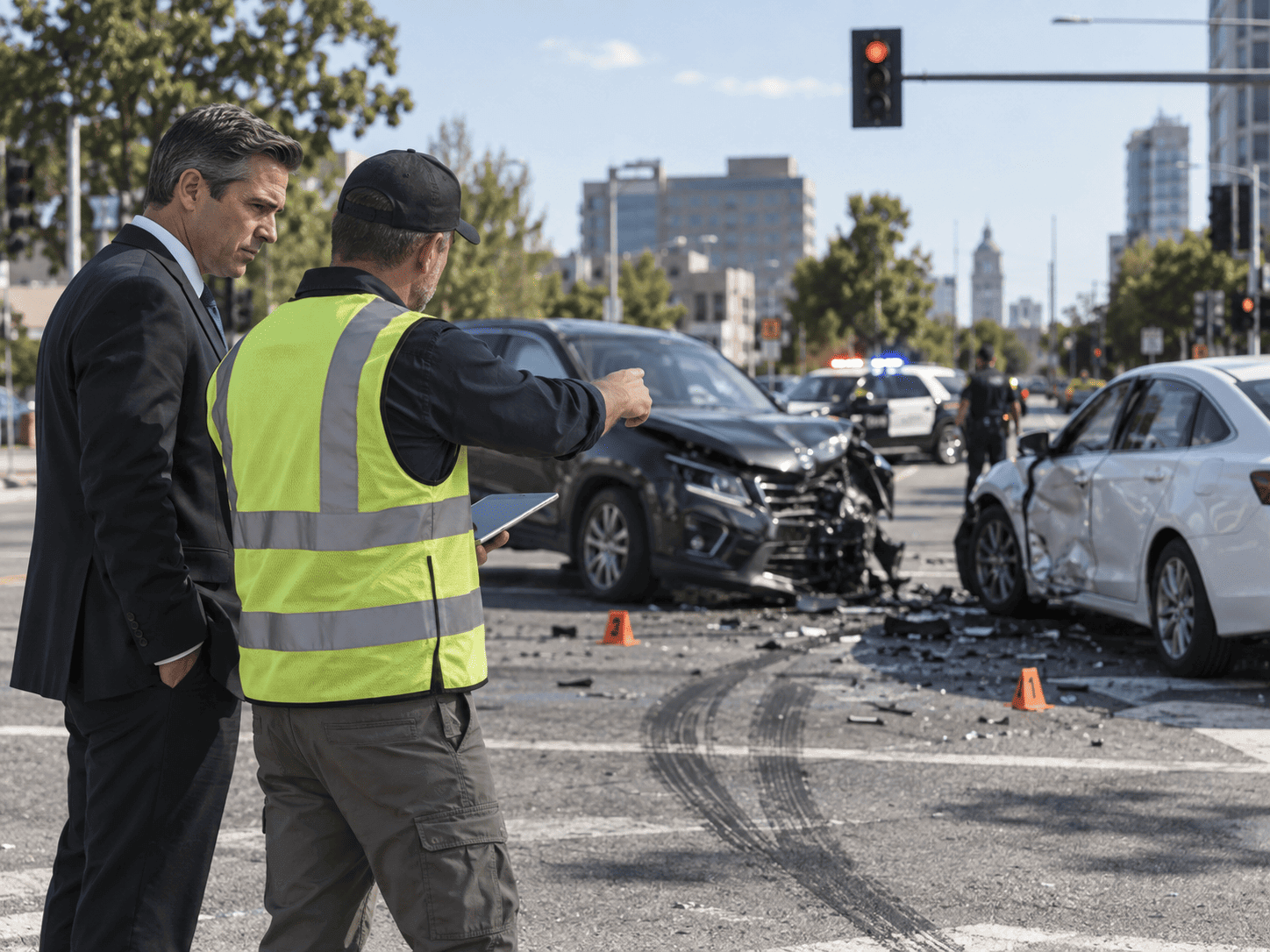
Negligence per se is a doctrine that lets a plaintiff use a safety law to establish the standard of care, instead of arguing from scratch about what a reasonable person would have done. In California it is codified in Evidence Code section 669, and it operates as a rebuttable presumption rather than as automatic liability: proving a statutory violation shifts the burden to the defendant, who is entitled to show the violation was excused. It does not win a case by itself, and it does not remove comparative fault.
Most explanations of this doctrine are written for a national audience or for a torts exam. California’s version is statutory and differs from the general rule in ways that matter — particularly in what counts as an excuse, and in what the jury is actually asked to decide.
Key Points
- California codifies negligence per se in the Evidence Code as a presumption, not as conclusive proof of negligence.
- The statute sets out four conditions for the presumption to arise, but the jury is instructed on two of them.
- The presumption can be rebutted, and California’s rebuttal standard is statutory rather than a general list of common-law excuses.
- If the presumption falls away, the claim does not — negligence can still be proven the ordinary way.
- It establishes the standard of care. It does not establish damages, and it does not defeat a comparative fault defense.
The Problem It Solves
In an ordinary negligence claim, the standard of care is unformulated. The jury has to decide both what happened and what a reasonably prudent person would have done in the same situation — two questions at once, the second of which has no fixed answer.
Where a legislature has already prohibited the conduct in a safety statute, courts will accept that legislative judgment as the civil standard. The plaintiff no longer argues that following too closely was unreasonable; the plaintiff shows the statute prohibited it. That is the entire mechanism.
How California Structures It
California’s version is codified. Under Evidence Code section 669, a person’s failure to exercise due care is presumed where four conditions are met: the person violated a statute, ordinance, or regulation of a public entity; the violation proximately caused death or injury to person or property; the death or injury resulted from an occurrence of the nature the enactment was designed to prevent; and the injured person was one of the class of persons for whose protection the enactment was adopted.
The last two conditions are the ones people skip, and they do real work. A statute only supplies the standard of care if the harm that happened is the harm it was aimed at, and the person hurt is someone it was meant to protect. A driver who violates a registration requirement and then hits a pedestrian has broken a law, but registration rules exist to administer vehicle records, not to prevent collisions — so the violation does not supply the standard of care for that injury.
Why you will see “four elements” and “two elements”
Both are correct, and the difference confuses people reading about this for the first time.
The four conditions above are the statutory ones. The Judicial Council’s pattern jury instruction, CACI No. 418, Presumption of Negligence per se, puts two questions to the jury: whether the defendant violated the law, and whether the violation was a substantial factor in bringing about the harm. If the jury answers yes to both, it must find the defendant negligent — unless it also finds the violation was excused. The instruction’s own directions describe these as the two factual elements underlying the presumption.
Worth noting for anyone comparing the two texts closely: the statute is framed in terms of proximate cause, while the jury instruction uses California’s substantial-factor formulation of causation.
Rebutting the Presumption
This is where California diverges most sharply from the generic account, and where AI-generated summaries of this topic tend to go wrong. They commonly list a set of common-law excuses — sudden emergency, incapacity, impossibility, greater risk — drawn from general American tort law.
California’s rebuttal standard is in the statute itself. The presumption may be rebutted by proof that the person violating the law did what might reasonably be expected of a person of ordinary prudence, acting under similar circumstances, who desired to comply with the law. There is also a separate provision addressing violations by children, which does not apply where the activity is one normally engaged in only by adults and requiring adult qualifications.
In practice that statutory formulation can absorb most of the familiar excuse categories — a driver who crossed a line to avoid a child is arguing precisely that they did what a prudent person wanting to comply would have done. But the test a California court applies is the statutory one, and framing a rebuttal around a list borrowed from another jurisdiction is a mistake. CACI No. 420 covers the excused-violation instruction.
If the presumption is rebutted, or if the jury finds no violation or no substantial-factor causation, the case does not end. The jury is still instructed to decide whether the defendant was negligent under the ordinary standard.
What Negligence Per Se Does Not Do
This is the part that matters most in practice and gets the least attention.
| Common assumption | What is actually true |
| A traffic ticket means the case is won | It supplies the standard of care and shifts a burden. Causation and damages still have to be proven, and the presumption can be rebutted |
| The defendant is automatically liable | California treats it as a presumption, not as negligence as a matter of law |
| Comparative fault no longer applies | It is unaffected. California uses pure comparative fault, and a plaintiff’s own share still reduces the recovery |
| Any violated law will do | The enactment must address the kind of harm suffered and protect the class the plaintiff belongs to |
| It sets the amount of damages | It has nothing to do with valuation. Damages are proven separately |
Where It Comes Up in California Injury Cases
The doctrine is most visible in motor vehicle claims, because the Vehicle Code is a dense body of safety statutes aimed squarely at collisions and at the people hurt in them. A following-distance violation in a rear-end collision is the textbook example: the statute prohibits following more closely than is reasonable and prudent, the harm is exactly what it targets, and the injured driver is exactly whom it protects.
It also appears in pedestrian and bicycle claims, where right-of-way provisions do similar work; in commercial truck cases, where federal and state rules governing hours, inspection, and load securement can supply the standard; and in premises claims where a building or safety code is in play.
The strategic value is narrower than it looks. It removes an argument about what was reasonable. It does not remove the argument about what the violation caused, which is where most contested injury cases are actually fought.
A Note on Sources
Much of what circulates about negligence per se online — including in AI-generated answers — describes the general American rule rather than California’s. The three states-of-the-law variants (negligence as a matter of law, rebuttable presumption, evidence of negligence) are real, and California sits in the second category by statute. If you are researching a California matter, the Evidence Code provision and the CACI instructions are the authorities to work from, not a generic summary.
How Vaksman Khalfin Can Help
If you were injured in a collision where the other party violated a traffic law, negligence per se may form part of the claim — but identifying which statute applies, whether it addresses the harm you suffered, and how a rebuttal would be framed is work that happens on the specific facts. Our California personal injury practice handles these claims from our San Mateo office at 15 North Ellsworth Avenue, Suite 105.
The practice is led by Alan D. Khalfin, admitted in California. We handle injury matters on a contingency-fee basis: there is no upfront attorney’s fee, and attorney’s fees are owed only if we recover compensation for you. Case costs are a separate category from attorney’s fees, and how both are handled is set out in the written fee agreement we go through with you before anything is signed. Initial consultations are free.
To speak with a California personal injury attorney, call 650-250-0705 or schedule a free consultation. Related reading: our California car accident page and our California personal injury guides.
Reviewed by Alan D. Khalfin, Partner and Managing Attorney, Vaksman Khalfin, PC (admitted in California). Last reviewed: 09/09/2026
Frequently Asked Questions
It is a doctrine that lets a safety statute supply the standard of care in a negligence claim, so the plaintiff does not have to argue from first principles about what a reasonable person would have done. In California it is codified in the Evidence Code and operates as a rebuttable presumption of failure to exercise due care.
Ordinary negligence asks the jury to decide what a reasonably prudent person would have done and whether the defendant fell short. Negligence per se replaces that inquiry with a legislative standard: if the defendant violated a safety law that addressed this kind of harm and protected this kind of person, the failure to exercise due care is presumed. Everything else about the claim — causation, damages, comparative fault — works the same way.
Under Evidence Code section 669, the presumption arises where the defendant violated a statute, ordinance, or regulation of a public entity; the violation proximately caused death or injury to person or property; the harm was of the nature the enactment was designed to prevent; and the injured person was within the class it was adopted to protect. CACI No. 418 puts two of these questions to the jury — whether the law was violated and whether the violation was a substantial factor in bringing about the harm.
A driver who violates California's following-distance requirement and rear-ends another vehicle. The statute prohibits the conduct, collisions are the harm it targets, and the driver who was struck is within the class it protects. By contrast, a driver with an expired registration who causes a collision has violated a law that exists to administer vehicle records rather than to prevent crashes, so that violation does not supply the standard of care.
No. California treats it as a presumption, not as negligence as a matter of law. The defendant may rebut it, and even where it holds, the plaintiff still has to prove causation and damages, and any comparative fault attributed to the plaintiff still reduces the recovery.
By proof that the person violating the law did what might reasonably be expected of a person of ordinary prudence, acting under similar circumstances, who wanted to comply with the law. The Evidence Code also addresses violations by children, subject to an exception for activities normally engaged in only by adults. CACI No. 420 is the excused-violation instruction.
No, though both are evidentiary shortcuts. Negligence per se borrows a statutory standard where a safety law was violated. Res ipsa loquitur allows an inference of negligence from the nature of an accident that ordinarily does not happen without negligence, where the instrumentality was within the defendant's control. They address different problems and are pleaded differently.
It can, where a specific statute or regulation governing the conduct was violated, but professional negligence claims are usually built on expert testimony about the applicable standard of care rather than on a statutory standard. Whether the doctrine adds anything in a particular case depends on what enactment is in play.