
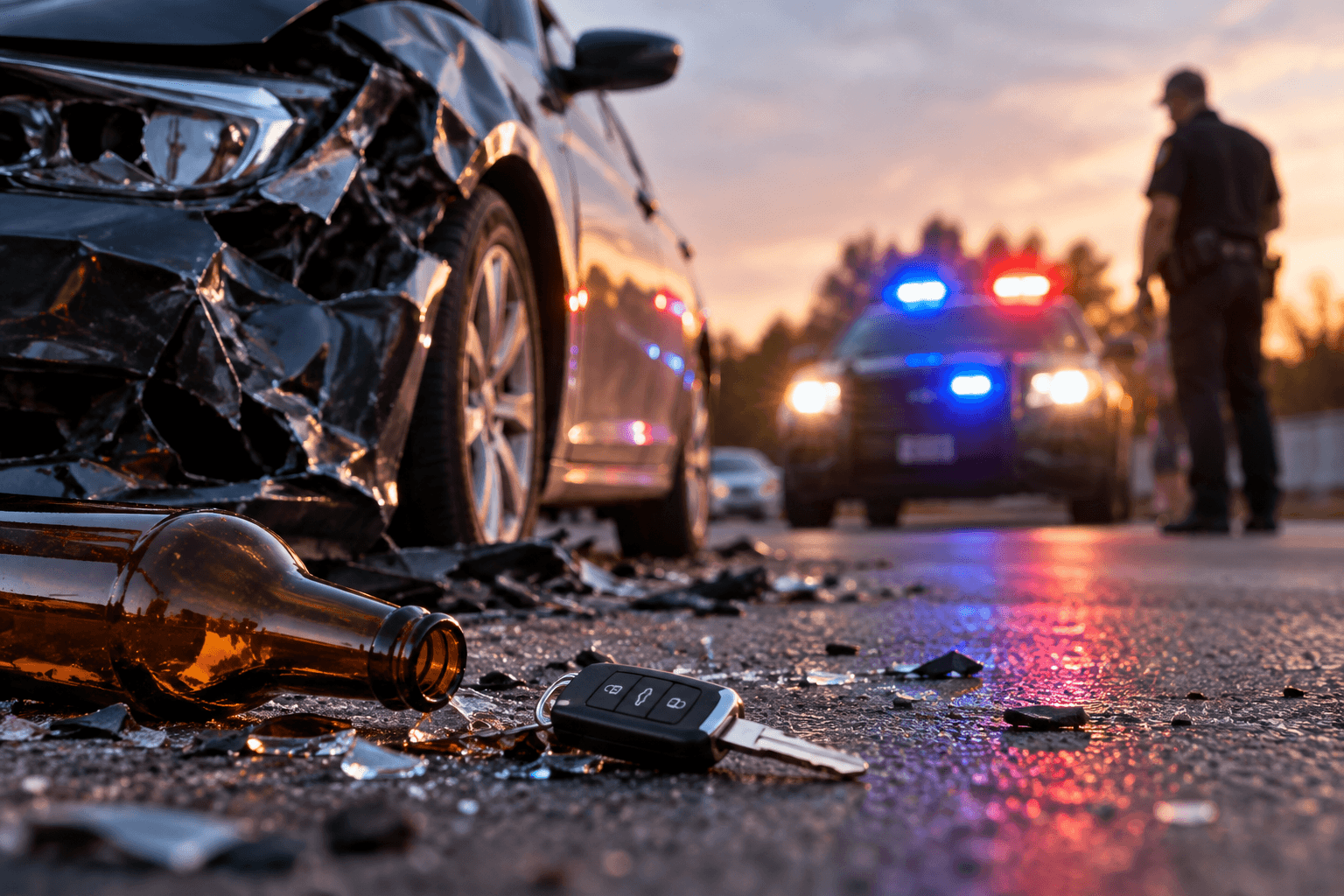
If you were injured in an accident caused by a drunk driver in California, a DUI accident lawyer can help you pursue compensation for medical expenses, lost wages, pain and suffering, and other damages. Unlike ordinary car accident claims, DUI cases may involve additional legal considerations, including potential punitive damages.
Depending on the circumstances, you may also have a claim against a third party, although California strictly limits alcohol-provider liability. An experienced attorney can investigate the accident, identify potentially responsible parties, and help you understand your legal options while protecting your right to compensation.
Key Takeaways
- Punitive damages require clear and convincing evidence of malice, oppression or fraud — a materially higher bar than the rest of a claim.
- Driving after willingly drinking to intoxication can show the conscious disregard that satisfies that test, but California authority treats it as capable of doing so rather than as doing so automatically.
- Punitive damages must be pleaded with particularity. They cannot be added in general terms and sorted out later.
- They also do not attach to everyone connected to the vehicle; owning and maintaining the car is not itself conduct that supports them.
- California’s statutes state that furnishing alcohol is not the proximate cause of injuries from intoxication, with a narrow exception concerning people under 21.
The Criminal Case Runs Separately
The prosecution and the civil claim are different proceedings with different parties, different burdens and different remedies, and the civil deadline does not wait for the criminal one. Our page on drunk driving accident claims sets that relationship out, including what criminal restitution does and does not cover.
What follows here is the part underneath it: the specific statutory machinery that makes these claims behave differently from an ordinary collision claim.
What Punitive Damages Actually Require
Civil Code section 3294 governs, and the standard it sets is unusual. Punitive damages are recoverable where it is shown “by clear and convincing evidence that the defendant acted with malice, oppression, or fraud.” Clear and convincing is a higher standard than the one that applies to the rest of a civil claim, and it applies to this question alone.
The definition that matters in a drunk driving case is malice, which the statute describes as conduct intended to cause injury, or “despicable conduct which is carried on by the defendant with a willful and conscious disregard” of the rights or safety of others. Almost every drunk driving claim runs on the second limb rather than the first, because an impaired driver is rarely trying to hurt anyone.
Two things sharpen that further. The California Supreme Court has explained that “despicable” refers to circumstances that are “base,” “vile,” or “contemptible” (College Hospital Inc. v. Superior Court (1994) 8 Cal.4th 704). And conscious disregard requires showing that the defendant was aware of the probable dangerous consequences of the conduct and willfully failed to avoid them.
Against that framework, the California Supreme Court held in Taylor v. Superior Court (1979) 24 Cal.3d 890 that one who “willfully consumes alcoholic beverages to the point of intoxication” knowing they must then drive may reasonably be held to exhibit conscious disregard for the safety of others.
Read that carefully. It establishes that the conduct is capable of meeting the test — not that it does so in every case. The facts still have to be developed and proved to the higher standard.
Why They Have to Be in the Claim From the Start
This is procedural rather than doctrinal, and it is the part most likely to be missed by someone handling a claim without help.
California courts require that the facts supporting punitive damages be pleaded with particularity. They may not be pleaded generally, and the ultimate facts showing entitlement have to appear in the pleading rather than being left to emerge later. A claim that simply asks for punitive damages without the supporting facts is vulnerable at the outset.
There is a second limit worth knowing, because it surprises people who assume punitive damages attach to everyone connected with the vehicle. They attach to conduct. Owning a car and maintaining it is not conduct that supports punitive damages, however the vehicle was then driven — a distinction that matters whenever the driver and the registered owner are different people.
The Bar Question Has a Statutory Answer
“Can you sue the bar” is asked in almost every one of these matters, and in California the answer starts from an unusually direct piece of statutory text.
Civil Code section 1714 provides that “the furnishing of alcoholic beverages is not the proximate cause of injuries resulting from intoxication.” The same section provides that “no social host who furnishes alcoholic beverages to any person may be held legally accountable for damages” suffered as a result, and Business and Professions Code section 25602 states the same for licensed sellers.
The reasoning the Legislature adopted is that consumption, not service, is the proximate cause. Whatever one thinks of it, it is a legislative choice rather than a gap in the case law, which is why arguments built on how much a venue served tend not to go where people expect.
There is a defined exception. Civil Code section 1714 provides for a claim against a parent, guardian or other adult who knowingly furnishes alcoholic beverages at his or her residence to a person whom he or she knows, or should have known, to be under 21 years of age — and in that situation the furnishing “may be found to be the proximate cause of resulting injuries or death.”
The exception is drawn tightly: it concerns a residence, an adult who knowingly furnishes, and a person under 21. It is not a general rule that service can be the cause where someone was obviously drunk.
What This Changes About How a Claim Is Built
These two statutes push the work in a particular direction.
- The driver is usually the claim. Because the provider route is closed in most situations, the available defendants are narrower than in other kinds of collision case, which makes insurance limits and the driver’s own position more decisive than usual.
- Conduct evidence has to be gathered as conduct evidence. Establishing conscious disregard to a clear and convincing standard calls for material about the decision to drive, not only about the collision — which is a different gathering exercise from proving an ordinary negligence claim.
- Timing is structural, not just prudent. Because the supporting facts have to be in the pleading, the investigation that produces them has to be done before filing rather than during the case.
- An award and a recovery are separate questions. Whether a punitive award can actually be collected depends on matters distinct from whether it is justified.
Talk to a California Drunk Driving Accident Lawyer
The questions that decide these claims are answerable early: who can actually be pursued, and whether the facts reach the higher standard the punitive damages statute sets. Both are better settled before a claim is filed than after.
Vaksman Khalfin, PC acts for people injured by impaired drivers across California, with Alan D. Khalfin leading that work from the San Mateo office. The first consultation is free, and injury claims are handled on a contingency-fee basis: there is no upfront cost, attorney’s fees are owed only if we recover compensation for you, and fees and case costs are separate items set out in the written agreement. Wider material sits on our California car accident page and in the California personal injury guides.
Reviewed by Alan D. Khalfin, Partner and Managing Attorney, Vaksman Khalfin, PC (admitted in California). Last reviewed: 10/16/2026
Frequently Asked Questions
An impaired driver who causes a collision can be liable in a civil claim for the resulting losses, separately from any prosecution. Where the person was driving your vehicle rather than another one, the available routes depend on whose insurance applies and on the arrangement under which they were driving, which is worth establishing early because it shapes everything that follows.
Civil Code section 3294 requires clear and convincing evidence that the defendant acted with malice, oppression or fraud. In these cases the route is usually malice, defined to include despicable conduct carried on with a willful and conscious disregard of the rights or safety of others.
The California Supreme Court has explained that despicable refers to circumstances that are base, vile or contemptible. It is a deliberately demanding word, and it is one reason punitive damages do not follow automatically from a serious collision.
No. California authority establishes that willingly drinking to intoxication and then driving is capable of showing conscious disregard for the safety of others. Capable of is not the same as does, and the facts still have to be proved to the clear and convincing standard.
Because the Legislature said so directly. Civil Code section 1714 provides that furnishing alcoholic beverages is not the proximate cause of injuries resulting from intoxication, and Business and Professions Code section 25602 carries the same position for licensed sellers. Consumption rather than service is treated as the cause.
Yes, and it is narrow. Civil Code section 1714 provides for a claim against a parent, guardian or other adult who knowingly furnishes alcoholic beverages at his or her residence to someone they know or should have known to be under 21, and there the furnishing may be found to be the proximate cause.
Not on the basis of ownership alone. Punitive damages respond to conduct, and owning and maintaining a vehicle is not conduct that supports them. Whether anything else about an owner's involvement does is a separate question turning on what that person actually did.
The supporting facts do. California courts require them to be pleaded with particularity rather than generally, which means the investigation that produces those facts has to happen before a claim is filed rather than after.
