
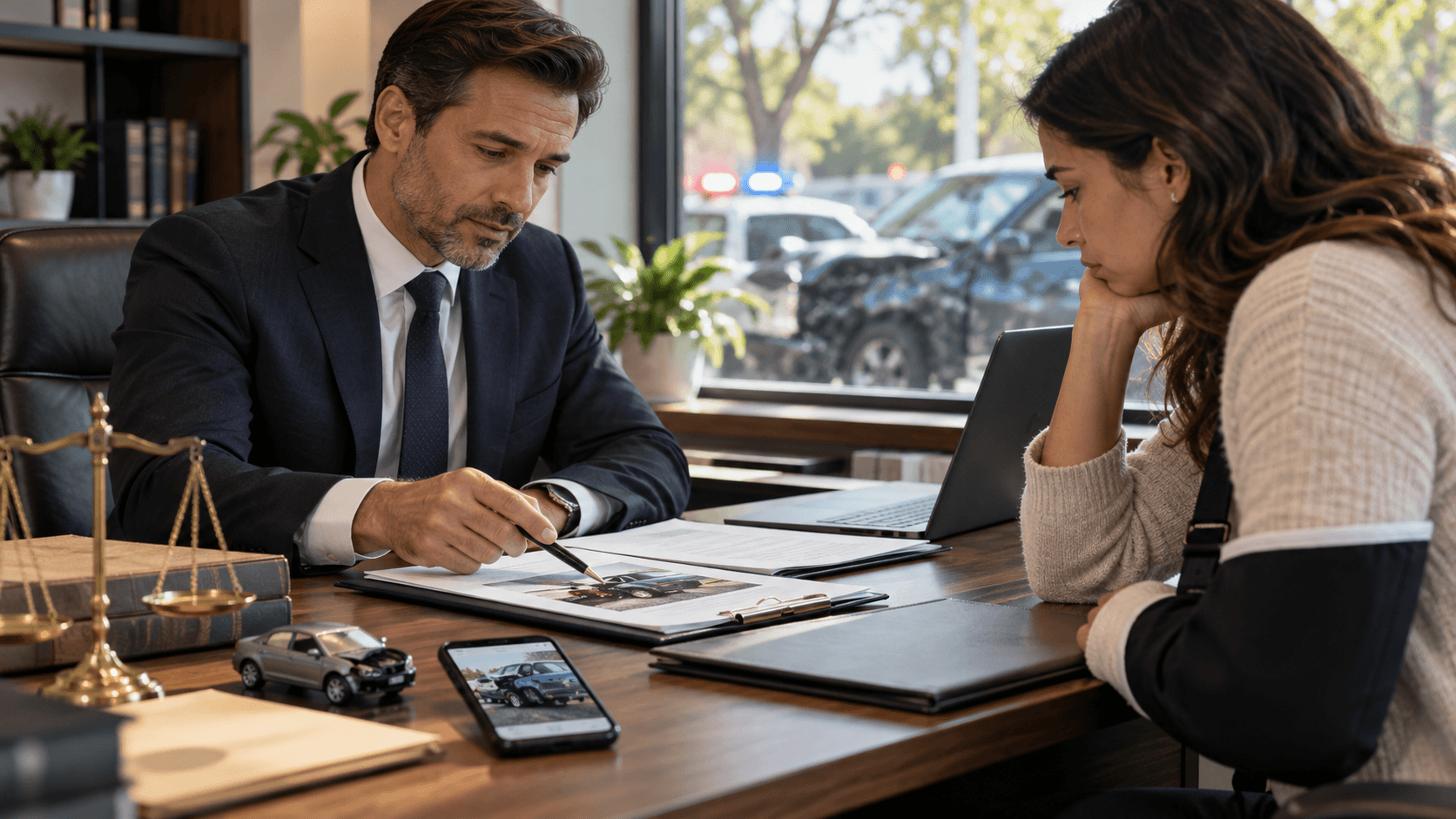
If you were injured in a hit-and-run accident in California, you may still be able to recover compensation even if the driver responsible cannot be found. A hit and run attorney can help you explore your legal options, review your insurance coverage, and determine who may be responsible for covering your injuries and financial losses.
Uninsured motorist coverage may provide compensation for medical expenses, lost wages, and other damages, depending on your policy and the circumstances of the accident. California also has specific reporting requirements that can affect your claim. Speaking with an attorney as soon as possible can help protect your rights and avoid costly mistakes.
Key Takeaways
- Uninsured motorist property damage coverage pays only where the uninsured driver is identified — which in an unsolved hit-and-run is exactly what is missing.
- Collision coverage, if you carry it, does not depend on identifying anyone.
- If anyone was injured or killed, a report to law enforcement is required within 24 hours.
- A separate report to the DMV is due within 10 days, and the DMV states plainly that law enforcement will not make it for you.
- Whether the bodily injury side of uninsured motorist coverage responds turns on conditions in the Insurance Code and in your own policy, which is a document worth reading before assuming either way.
Where the Money Can Come From
With the driver gone, three sources are worth separating, because they behave differently.
Your own uninsured motorist coverage. Insurers in California must offer it, and declining it requires a written rejection — which is why many people carry it without remembering. It is the coverage designed for exactly this situation, and it has two halves that work differently from one another.
Collision coverage. This pays toward repairing your vehicle without reference to who caused the damage, which makes it indifferent to whether anyone is ever identified. Many policies pair it with a waiver that covers the deductible where an uninsured driver was at fault.
The driver, if they are found. Hit-and-run drivers are identified more often than people expect — from footage, from partial plates, from damage reported to a body shop. That possibility is a reason to preserve evidence rather than a basis for waiting.
The Identification Problem Nobody Mentions Until It Matters
This is the detail that most often catches people out, and it is published by the regulator in plain terms.
Uninsured motorist coverage splits into a bodily injury side and a property damage side, and the two do not behave alike. The property damage half is capped at $3,500, is aimed at drivers without collision coverage, and carries one condition the California Department of Insurance states outright: it “only pays if the uninsured driver is identified.”
Read that against a hit-and-run and the problem is immediate. The circumstance that makes the claim necessary is the same circumstance that removes this particular coverage from play. If the driver is never found, uninsured motorist property damage does not respond, and the repair falls to collision coverage if you carry it.
The bodily injury side is a separate question with its own rules, set partly by the Insurance Code and partly by the policy itself. Those conditions are specific, and some of them turn on how and how quickly the collision was reported. That is a reason to read the policy, or have it read, rather than to assume the coverage either does or does not apply.
Two Clocks That Start Running Immediately — Both of Them Yours
Independently of any insurance claim, California imposes reporting duties on drivers involved in a collision. They apply whether or not you caused it, and in a hit-and-run they are easy to overlook because it feels as though the obligations should sit with the person who left.
Within 24 hours, to law enforcement. The DMV’s driver handbook states that a report must be made to law enforcement within 24 hours of a collision if anyone is injured or killed. Your insurance agent, broker, or legal representative can make it.
Within 10 days, to the DMV. A collision must be reported to the DMV if it caused more than $1,000 in damage to property, or if anyone was injured or killed — and the handbook is explicit that this applies “even if the injuries were minor.” The form is the SR 1, and the DMV states that each driver must file it, that you must file “whether or not you caused the collision,” and that an SR-1 is required “in addition to any other report made to the police, CHP, or your insurance company.”
Two sentences from the DMV deserve to be read twice. The first: “Law enforcement will not make a report for you.” The second: “Your driving privilege will be suspended if you fail to file a report.”
Taken together, those mean a person who was hit by someone who drove off, who called the police and gave a statement at the scene, may still be carrying an unmet obligation — and the consequence of missing it lands on their licence rather than on the driver who left.
Why the Claim Feels Different From an Ordinary One
In a standard collision the claim goes to someone else’s insurer, and the opposing interests sit where anyone would expect them to. Turn to your own uninsured motorist coverage instead and the company weighing the claim is your own.
That is a normal feature of how the coverage works rather than a sign of anything going wrong, but it changes the character of the process. Fault still has to be established even though the person at fault is absent, and it has to be established to the satisfaction of a carrier that will be paying it.
What Helps, and What Stops Helping Quickly
- Anything that fixes the vehicle’s identity. A partial plate, a colour and model, a direction of travel, visible damage — fragments that seem useless individually are what an investigation works from.
- Nearby footage. Private cameras on businesses and homes record over themselves on short cycles. This is the item that disappears fastest and the one most often decisive.
- Independent witnesses. Contact details collected at the scene, because people are findable at the scene and rarely afterwards.
- The damage to your own vehicle, before repair. Photographed properly, it carries information about the other vehicle.
- Your own policy declarations page. It answers what coverage exists, which is the first thing anyone assessing the claim will need.
Talk to a California Hit and Run Lawyer
Two things are worth settling in the first days: what your own policy actually covers, and whether the reporting obligations have been met. Both have definite answers, and neither depends on the driver ever being found.
Vaksman Khalfin, PC acts for people injured in collisions across California, with Alan D. Khalfin leading that work from the San Mateo office. The first consultation is free. Wider material on collision claims is on our California car accident page and in the California personal injury guides.
Reviewed by Alan D. Khalfin, Partner and Managing Attorney, Vaksman Khalfin, PC (admitted in California). Last reviewed: 10/16/2026
Frequently Asked Questions
Usually your own policy. Uninsured motorist coverage exists for collisions with drivers who carry no insurance, and California insurers must offer it. Vehicle damage is the exception worth knowing about: the property damage half of that coverage carries an identification condition, so where nobody is ever found, collision coverage tends to be what actually repairs the car.
The two halves behave differently. On property damage, the regulator's published position is that the coverage "only pays if the uninsured driver is identified" — which an unsolved hit-and-run by definition does not satisfy. Bodily injury is governed separately, by the Insurance Code and by the policy wording, with conditions that can turn on how and how quickly the collision was reported. That half should be read off the policy rather than assumed either way.
If anyone was injured or killed, or property damage exceeded $1,000, yes — within 10 days, on form SR 1. The DMV states that you must file whether or not you caused the collision, that the SR-1 is required in addition to any police or insurance report, that law enforcement will not file it for you, and that failing to file will result in suspension of your driving privilege.
Where anyone was injured or killed, the DMV's handbook states that a report must be made to law enforcement within 24 hours of the collision. An agent, broker or legal representative can make that report.
The difficulty is rarely about fault, which is usually plain. It is about identification and about satisfying a carrier that fault lay with the absent driver. Both depend on material that degrades quickly — footage above all — which is why the useful question early is what evidence still exists rather than what the claim is worth.
No figure can be offered, and published ranges describe a mixture of outcomes rather than anything about a particular situation. Where the driver is never identified the practical ceiling is often set by the limits on your own policy, which is a reason to know what those limits are.
That is a question for your carrier and depends on your policy and the circumstances rather than on any general rule. It is worth asking directly rather than assuming, and it is not a reason to delay reporting, since the reporting obligations above apply regardless.
Consultations at Vaksman Khalfin, PC are free. Injury claims are handled on a contingency-fee basis: there is no upfront cost, and attorney's fees are owed only if we recover compensation for you. Fees and case costs are separate items, and how costs are handled is set out in the written agreement.
