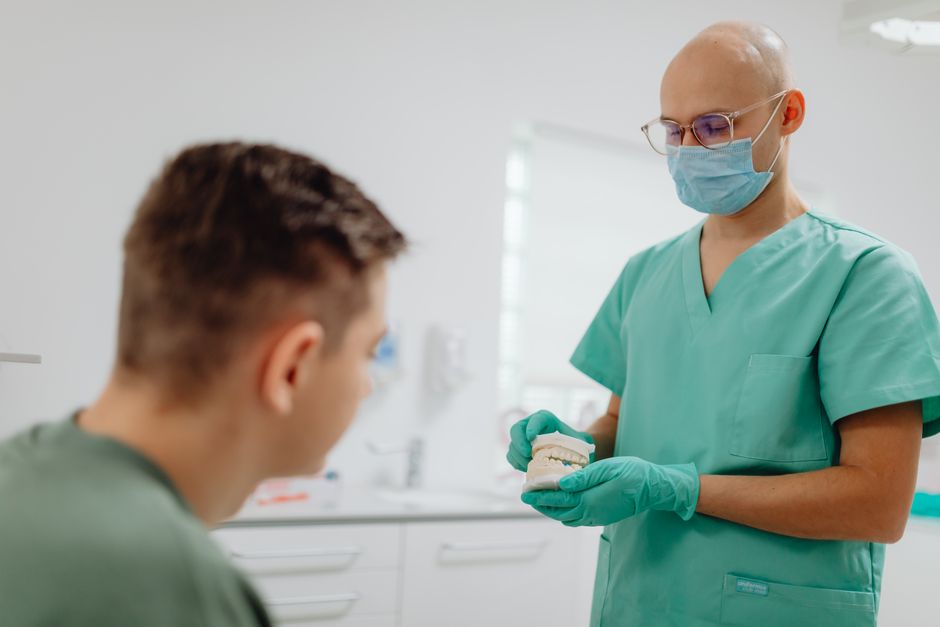
A dental malpractice lawyer helps patients who were harmed when a dentist’s care fell below the accepted standard. Not every bad outcome is malpractice, but when negligence causes a serious injury — nerve damage after an extraction, a failed implant, an anaesthesia error — a patient may have a claim.
This page explains what dental malpractice is, the injuries we see most, the deadlines that apply, and how compensation works. It also covers a pre-filing notice requirement that catches people out. Our California personal injury attorneys work from our San Mateo office. For a free consultation, call 650-250-0705.
What Counts as Dental Malpractice in California?
Dental malpractice is professional negligence: care that falls below what a reasonably careful dentist would have done, causing injury. A claim generally requires a dentist-patient relationship, a breach of the standard of care, causation, and documented harm. In California you generally have one year from when you discover the injury, or three years from the injury itself, whichever comes first, under Code of Civil Procedure section 340.5 — and section 364 requires 90 days’ written notice to the dentist before a lawsuit is filed.
Key Takeaways
- A poor result is not malpractice by itself; the question is whether the care met the standard.
- Section 364 requires 90 days’ written notice of intent to sue before the action is filed.
- The section 340.5 deadline has two triggers, and the earlier one governs.
- Medical and dental bills and lost income are not capped; non-economic damages are limited by MICRA.
- For 2026 the MICRA non-economic cap is $470,000 in non-death cases and $650,000 in wrongful death cases.
What Dental Malpractice Is
Dental malpractice is professional negligence by a dentist or oral surgeon. Like other health care providers, dentists must meet a standard of care: the level of skill and caution a reasonably careful provider would use in the same situation. When a dentist falls below that standard and the patient is injured as a result, a claim may follow.
A case generally has four parts:
- A dentist-patient relationship, which creates a duty of care
- A breach of the standard of care — the dentist did something a careful dentist would not have done, or failed to do something a careful dentist would have done
- Causation, meaning that breach actually caused the injury
- Damages, meaning real harm such as a new injury, added surgery, lost income, or lasting pain
An important point: a poor result by itself is not malpractice. Many procedures carry known risks even when done correctly. The question is whether the care met the standard, which is what turns on the dental records and the opinion of a qualified expert.
Dental Nerve Injuries
Nerve injuries are among the most serious harms in dentistry because they can affect how you feel, taste, and speak every day. Two nerves in the lower jaw are most often involved, both branches of the trigeminal nerve: the inferior alveolar nerve, which runs inside the lower jaw and gives feeling to the lower lip and chin, and the lingual nerve, which runs along the floor of the mouth near the lower wisdom teeth and gives feeling and taste to the tongue.
When one of these nerves is injured, the result can be numbness, tingling, a painful or burning sensation, or a loss of taste. For some patients this fades over weeks or months. For others it does not.
Common situations include removing lower third molars when the roots are near the nerve canal, placing an implant that is too long or positioned into the nerve canal, a local anaesthetic injection such as an inferior alveolar nerve block that strikes the nerve, and root canal treatment where filling material is pushed into the nerve canal.
Not every nerve injury is malpractice. Sometimes the risk is unavoidable and was properly disclosed. It may be malpractice where the dentist ignored what the imaging showed, failed to order the right imaging, used poor technique, or should have referred the case to a specialist. A dental expert review is what separates a known complication from negligence.
We describe injuries here only in general terms. Nothing on this page is medical advice, and questions about diagnosis or treatment belong with a qualified provider.
Other Types of Dental Malpractice
Nerve injuries are one part of a larger picture. Claims also involve:
- Wrong-tooth or unnecessary extractions
- Failed, misplaced, or infected dental implants
- Anaesthesia and sedation errors, including dosing mistakes
- Failure to diagnose oral cancer or advanced gum disease
- Root canal and crown errors that damage healthy teeth
- Serious infections that were not caught or treated in time
What ties these together is the same legal test: did the care fall below the standard, and did that cause real harm?
Proving a Dental Malpractice Claim
These cases are built on evidence, not on a bad experience. The core of the case is the standard of care and whether the dentist met it. California law requires expert testimony from a qualified dental expert who can explain what a careful dentist would have done and how the treatment fell short.
We gather the full dental records, x-rays and scans, treatment notes, and billing, and work with experts to review them. From there we can show how the breach caused the injury and document the resulting harm — from corrective surgery to lasting nerve symptoms.
Two Deadlines, and a Notice Requirement Before You File
The filing deadline. Dental malpractice claims follow the medical malpractice period in Code of Civil Procedure section 340.5. In general, the action must be filed within one year of when the injured person discovered, or reasonably should have discovered, the injury, or within three years of the date of the injury — whichever comes first. That dual trigger is unusual, and the earlier of the two governs. There are limited exceptions that can extend the time, such as fraud, a dentist’s intentional concealment, or a foreign object left in the body with no treatment purpose. Special rules apply to children.
The notice requirement. Separately, Code of Civil Procedure section 364 requires that a plaintiff serve the health care provider with 90 days’ written notice of intent to commence the action before the lawsuit is filed. Where that notice is served within the last 90 days of the limitations period, the period is extended for 90 days from service.
This step is easy to miss and it exists for every professional negligence claim against a health care provider. Because the clock can be short and there is a notice step before filing, it is worth speaking with a lawyer promptly rather than waiting.
Compensation and the MICRA Cap
Two kinds of damages can be recovered in a dental malpractice case, and California treats them differently.
Economic damages are your measurable financial losses: past and future medical and dental care, corrective surgery, and lost income. These are not capped in California.
Non-economic damages cover pain, suffering, and loss of enjoyment of life. These are limited by California’s Medical Injury Compensation Reform Act, found in Civil Code section 3333.2.
Assembly Bill 35, effective January 1, 2023, replaced the long-standing $250,000 cap with a stepped schedule. The starting figures were $350,000 for non-death cases and $500,000 for wrongful death, rising by $40,000 and $50,000 respectively each January 1 for ten years. For 2026, the cap is $470,000 in non-death cases and $650,000 in wrongful death cases. The schedule continues until the caps reach $750,000 and $1,000,000 in 2033, after which annual inflation adjustments apply.
One feature of AB 35 is frequently overlooked: the legislation set out three categories of defendants who can each be separately liable for an independent award of non-economic damages — health care providers, health care institutions, and unaffiliated health care providers or institutions. Whether more than one category is involved in a particular case depends entirely on the facts.
The cap applies only to non-economic damages. It does not touch your medical bills, your corrective treatment, or your lost earnings — which in serious cases are often the larger part of the claim.
What Representation Costs
Attorney’s fees in professional negligence actions against health care providers are separately limited by statute, under Business and Professions Code section 6146, which sets a sliding scale tied to the amount recovered. That limit applies in dental malpractice cases as it does in other medical negligence matters.
We work on a contingency fee, so there is no fee unless we recover for you, and the first consultation is free.
Dental Malpractice Claims in San Mateo and on the Peninsula
Our office at 15 North Ellsworth Avenue, Suite 105, San Mateo, CA 94401 works with injured patients across the Peninsula. Civil matters for this county are generally heard in the San Mateo County Superior Court.
One practical local point: dental care here is often delivered across more than one provider — a general dentist who places a case, an oral surgeon who performs the extraction or implant, and sometimes a separate anaesthesia provider. Establishing who did what, and whose records show what was known before the procedure, is usually the first substantive step. It also matters for the AB 35 categories described above.
Details about the office are on our San Mateo page, and related explanations are collected in our California personal injury guides.
How We Help
We represent injured patients, not dental offices or insurers. When you call, we listen to what happened and give you an honest read on whether the case looks like malpractice. From there we obtain and review the dental records, imaging, and billing, work with qualified dental experts to evaluate the standard of care, handle the section 364 notice and the MICRA framework, build the full value of your economic and non-economic losses, and negotiate with the provider’s insurer — taking the case to court where that becomes necessary.
The firm’s personal injury practice is led by Alan D. Khalfin and Robert B. Vaksman. Dental injuries are part of our broader California personal injury practice. Where a dental injury causes a death, certain surviving family members may be able to bring a wrongful death claim.
If you were hurt by dental care, especially if you have lasting numbness, pain, or a loss of taste after a procedure, do not wait for a deadline to pass. Call 650-250-0705 or schedule a free consultation.
This page provides general information about California law and is not legal or medical advice; reading it or contacting the firm does not create an attorney-client relationship. Statutory caps are adjusted on an annual schedule and should be confirmed for the applicable year. Every case is different, and prior results do not guarantee a similar outcome.
Reviewed by Alan D. Khalfin, Partner and Managing Attorney, Vaksman Khalfin, PC (admitted in California). Last reviewed: 08/25/2026
Dental Malpractice Frequently Asked Questions
No. Some nerve injury is a known risk of certain procedures even when the work is done correctly and the risk was properly disclosed. It may be malpractice where the dentist ignored what the imaging showed, failed to order appropriate imaging, used poor technique, or should have referred the case to a specialist. A dental expert review is what distinguishes a known complication from negligence.
Under Code of Civil Procedure section 340.5, generally one year from when you discovered or reasonably should have discovered the injury, or three years from the date of the injury, whichever comes first. Limited exceptions can extend the time, including fraud, intentional concealment, or a foreign object left in the body, and special rules apply to children.
Yes. Code of Civil Procedure section 364 requires 90 days' written notice of intent to commence the action before a lawsuit is filed against a health care provider. Where the notice is served within the last 90 days of the limitations period, that period is extended for 90 days from service.
Economic damages — past and future medical and dental care, corrective surgery, and lost income — are not capped in California. Non-economic damages for pain and suffering are limited by Civil Code section 3333.2. For 2026 that cap is $470,000 in non-death cases and $650,000 in wrongful death cases, under the AB 35 schedule. What any individual claim is worth depends on the evidence, and no lawyer can quote a figure in advance.
It varies. For some patients, numbness or altered sensation resolves over weeks or months; for others it does not. That is a medical question for a qualified provider rather than something this page can answer, though it matters to a claim because lasting symptoms affect the harm that has to be documented.
Most commonly, removal of lower third molars where the roots sit close to the nerve canal, implant placement that is too long or positioned into the canal, local anaesthetic injections such as an inferior alveolar nerve block, and root canal treatment where filling material is pushed into the nerve canal.
California law requires expert testimony to establish the standard of care in a professional negligence case. A qualified dental expert explains what a careful dentist would have done and how the treatment fell short. That is the core of the case rather than an optional add-on.
We work on a contingency fee, so there is no fee unless we recover for you, and the first consultation is free. Attorney's fees in professional negligence actions against health care providers are also limited by statute under Business and Professions Code section 6146, which sets a sliding scale tied to the amount recovered.
Possibly. Both are among the more common dental malpractice claims. The question is the same as in any other case: did the care fall below what a reasonably careful dentist would have done, and did that cause real harm?
It can. Establishing who did what, and whose records show what was known before the procedure, is usually the first substantive step. It also matters under AB 35, which set out three categories of defendants who can each be separately liable for an independent award of non-economic damages.